
How to Build Feedback Loops with Remote Teams
 16 min read

When managing remote teams, especially across time zones, feedback is vital to keep everyone aligned and engaged. Without structured systems, remote work can lead to misunderstandings and disengagement. Research shows that teams receiving regular feedback report higher engagement and performance. This is a cornerstone of successful offshore staffing. Here’s a quick guide:
- Set Up Communication Channels: Use tools like Slack, Zoom, or lightweight platforms optimized for low bandwidth. Define clear guidelines for their use, including response times and feedback formats.
- Schedule Regular Feedback: Plan biweekly one-on-ones, daily check-ins, and monthly team reviews to maintain consistent communication.
- Use Feedback Tools: Integrate feedback into project management platforms like Asana or tools for anonymous input like Polly.
- Train for Constructive Feedback: Teach methods like the SBI model (Situation-Behavior-Impact) and prioritize trust-building.
- Document and Act on Feedback: Centralize feedback in a shared repository and review it regularly to implement changes.
For managers working with South African talent, consider factors like time zones, connectivity issues, and cultural nuances to tailor your approach. Feedback loops, when done right, ensure clarity, improve performance, and strengthen team cohesion.
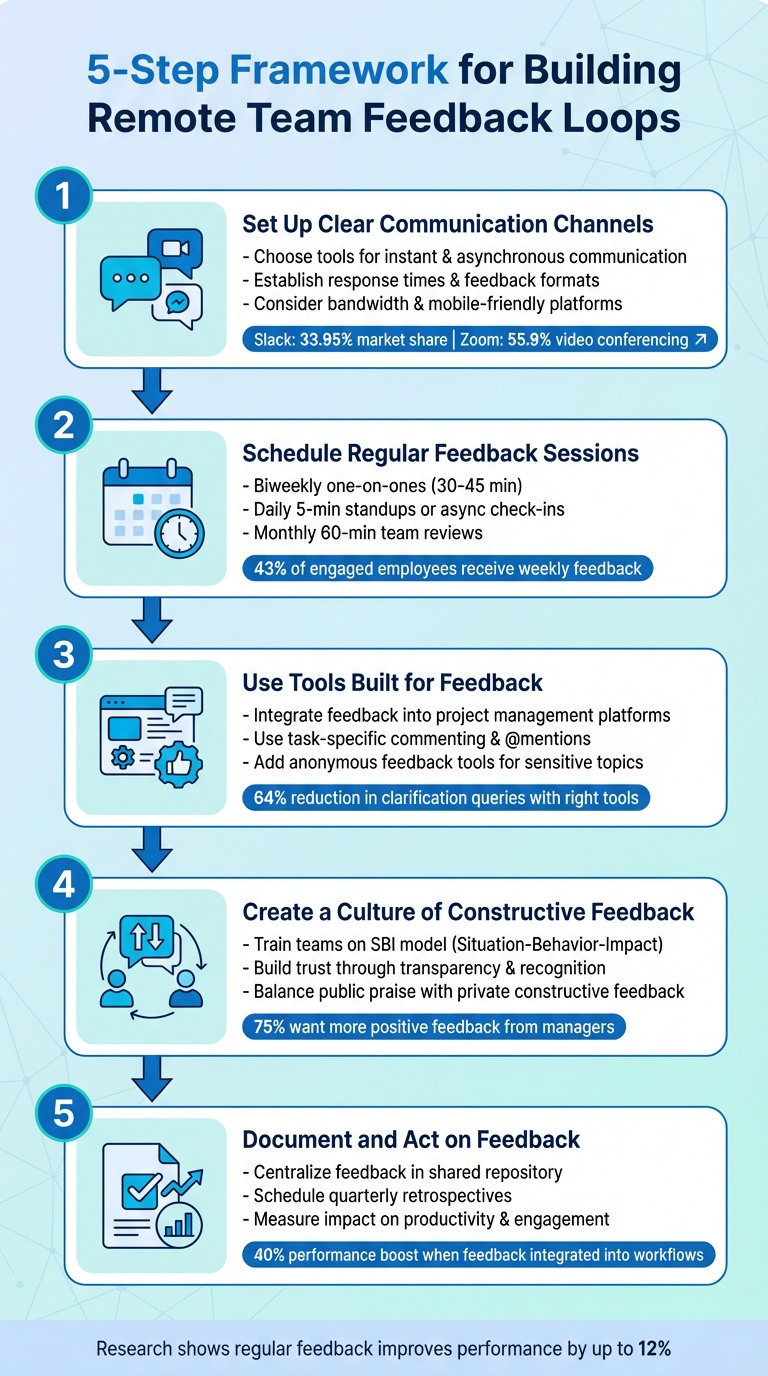
5-Step Framework for Building Remote Team Feedback Loops
How Can Remote Teams Establish Consistent Feedback Loops?
sbb-itb-7512dae
Step 1: Set Up Clear Communication Channels
To build effective feedback loops, start by choosing the right communication tools and establishing clear usage guidelines. Without these, feedback can easily get overlooked, and responses can take longer than necessary.
Pick the Right Communication Tools
Choose tools that support both instant messaging and asynchronous communication. For example, as of early 2025, Slack held 33.95% of the workplace communication market, while Zoom accounted for 55.9% of video conferencing usage. Platforms like Slack or Microsoft Teams allow for threaded discussions and quick updates via @mentions, making them great for daily check-ins. For more complex or sensitive topics, video conferencing tools like Zoom or Google Meet provide the benefit of live interaction. Additionally, asynchronous video tools like Loom are helpful for bridging time zone gaps, enabling team members to review walkthroughs at their convenience.
If you’re working with teams in South Africa, it’s important to consider local infrastructure challenges. Understanding why offshore staffing is a smart strategy can help you navigate these regional nuances while scaling. Frequent power outages and connectivity issues mean your tools should function well on low bandwidth. For example, in October 2025, Cynoia introduced lightweight, 2G-optimized tools that reduced project clarification queries by 64%. Since 78% of professionals in Africa primarily work from mobile devices, ensure your platforms are mobile-friendly.
Once you’ve selected the right tools, the next step is to establish clear guidelines for their use.
Create Communication Guidelines
Having the right tools is only half the battle – defining how to use them is equally important. A Communication Charter can outline key expectations, such as response times, feedback formats, and meeting practices, ensuring everyone is on the same page.
Start by assigning specific purposes to different channels. For instance, use one channel to share public praise, reserve video calls for delicate feedback, and post status updates on project boards for asynchronous review. Set clear expectations for response times: asynchronous channels should have a 24-hour acknowledgment rule, while urgent issues flagged via chat should be addressed within an hour.
For teams operating across multiple time zones, coordination is key. If you’re working with South African teams on SAST (GMT+2), identify 2–3 “Golden Hours” when everyone is online for live feedback sessions. Research shows that remote teams with at least three overlapping hours of work time complete projects 12% faster. Shared calendars with automatic time zone conversions can also help minimize scheduling conflicts.
Standardizing feedback formats is another crucial step. Train your team to use the Situation-Behavior-Impact (SBI) method, which involves describing the situation, explaining the observed behavior, and clarifying its impact. This approach keeps feedback objective and actionable. Julie Zhuo, VP of Product Design at Facebook, emphasizes the importance of clear feedback, stating:
“Giving feedback knocks down two of the biggest barriers preventing your reports from doing great work – unclear expectations and inadequate skills – so that they know exactly where to aim and how to hit the target.”
Finally, keep in mind the importance of cultural nuances. South Africans often value direct and confident communication. While bluntness is appreciated, it’s essential to maintain respect, aligning with the Ubuntu philosophy of interconnectedness.
Step 2: Schedule Regular Feedback Sessions
Once your communication channels are in place, the next step is to establish a consistent feedback schedule. Regular feedback sessions help avoid feelings of isolation and uncover inefficiencies that might otherwise go unnoticed.
Here’s why this matters: 43% of highly engaged employees receive feedback at least once a week, and companies that prioritize ongoing feedback report performance improvements of up to 12%. On the flip side, 23% of employees feel unsatisfied with how often they hear from their direct managers. When feedback becomes inconsistent, trust can erode, and team members may lose focus on shared goals—one of the many communication challenges that can hinder remote operations.
To make feedback effective, structure your meetings in a way that turns communication into actionable steps.
Set Up One-on-Ones and Team Meetings
A balanced schedule might include biweekly one-on-ones (30–45 minutes), daily 5-minute standups (or asynchronous check-ins), and monthly 60-minute team reviews. One-on-ones should go beyond task updates to focus on individual growth, career aspirations, and any personal challenges. Sharing an agenda at least 24 hours in advance allows your team members – especially those in different time zones like South Africa – to prepare effectively.
Daily standups are ideal for addressing immediate blockers, while monthly team reviews provide an opportunity to discuss project milestones and updates from stakeholders.
Whenever possible, prioritize video calls over text-based communication. As Ashok Venkatraman, Director of Client Services at Apexon, explains:
Earning your employees’ trust is a difficult thing to achieve in normal circumstances, and being remote means that as managers we need to put in serious effort.
Video calls allow you to pick up on body language cues and reduce the chances of misunderstandings, especially when discussing constructive feedback.
Apply Structured Feedback Methods
To make the most of your scheduled sessions, use structured frameworks that turn feedback into actionable insights.
For team retrospectives, try the Start-Stop-Continue method. This approach encourages your team to identify new practices to Start, habits to Stop, and strategies to Continue. After brainstorming, let team members vote on the top 3–5 “Start” initiatives they believe should take priority for the next quarter.
For individual feedback, stick with the Situation-Behavior-Impact (SBI) model from your communication guidelines. Take it a step further by asking about the employee’s Intent – helping to bridge the gap between their intentions and the actual impact of their actions. Alan Deitch, Director of Engineering at SpotHero, emphasizes the importance of timing when delivering feedback:
At the end of the day, the feedback that I want to give someone is meaningless if that person isn’t prepared to receive it at that moment.
Before diving into feedback, ask for consent to ensure the recipient is ready. To confirm understanding, ask the employee to summarize their top three takeaways at the end of the session.
Step 3: Use Tools Built for Feedback
Using the right tools can turn feedback from scattered conversations into a clear, organized process. Instead of digging through endless email threads or chat messages, integrate feedback directly into the platforms your team already uses. This keeps everything in context and makes it easier to follow up on tasks and action items.
Add Feedback Features to Project Management Tools
To make feedback part of your daily workflow, choose project management tools that allow task-specific commenting and @mentions. This way, feedback happens right where the work is being done, eliminating the need for extra meetings or long email chains. For instance, if a team member submits a design draft in Asana, you can leave inline comments directly on the task, keeping the feedback visible and tied to the project history.
Tools with features like progress tracking and real-time status updates can also keep everyone on the same page about where a project stands. Custom fields can be particularly helpful – use labels like “needs review”, “ready for feedback”, or “approved” to make it clear when input is needed. Many of these platforms offer flexible pricing, from free plans to options starting around $10 per user per month, with flat-rate plans available for larger teams.
For a more well-rounded approach, consider combining these tools with mechanisms for anonymous feedback.
Use Anonymous Feedback Tools
Anonymous feedback tools can encourage open and honest input, especially on sensitive topics like team dynamics or management practices. As Team Asana points out:
Anonymity provides a blanket of safety for team members that may be shy or nervous about expressing themselves.
This can be especially beneficial for remote staff roles for team members who are introverted or hesitant to voice concerns during meetings.
Once you’ve collected anonymous feedback, share a summary of the results with your team and outline the steps you plan to take in response. This shows that their input is valued and leads to meaningful changes. Nicola Scoon, an expert in internal communications, highlights the importance of trust:
Your employees need to feel like there’s a relationship of trust before they’ll give you honest feedback – anonymous or not.
For quick surveys or anonymous Q&A sessions, tools like Polly or Nailted can be integrated with Slack or Microsoft Teams. These tools work within your existing workflow, making it simple for team members to provide feedback without juggling multiple apps.
Step 4: Create a Culture of Constructive Feedback
Feedback works best when it’s woven into the daily rhythm of your team, not treated as an occasional task. But here’s the challenge – feedback can backfire if not handled well. A telling statistic: 90% of workers who received negative feedback reported feeling disengaged. The key difference? It’s all about how you create and nurture a feedback-friendly environment.
Train Teams on Feedback Best Practices
Teaching your team how to deliver feedback effectively is just as crucial as encouraging them to do it. A great framework to start with is the SBI model: describe the situation, specify the behavior, and explain its impact. Avoid words like “always” or “never,” which can make people defensive. Instead, focus on “I” statements to keep things objective and constructive.
To make feedback feel natural, hold monthly role-playing sessions where team members can practice giving and receiving input. Before diving into feedback, ask employees how they think a project went – this helps you understand their perspective and opens the door for a two-way conversation. For more delicate feedback, consider using video calls to pick up on nonverbal cues and reduce potential misunderstandings. If a live discussion isn’t possible, sending an asynchronous video (via tools like Loom) can give the recipient time to process before following up with a live chat within 24 hours.
These practices don’t just improve feedback skills – they also build trust and pave the way for stronger team connections.
Build Trust and Recognition
Feedback training only works when backed by trust and transparency. Managers play a huge role here. By openly sharing their own areas for growth and actively seeking input from their teams, managers set the tone for a feedback-positive culture. Leadership expert Courtney Lynch highlights this perfectly:
“Leaders inspire accountability through their ability to accept responsibility before they place blame.”
When team members see their leaders embracing feedback, it creates the psychological safety needed for everyone to feel comfortable doing the same.
To strike the right balance, set up separate channels for public recognition and private feedback. Use tools like virtual kudos boards or a “Wall of Fame” to celebrate wins publicly, while reserving one-on-one video meetings for more constructive discussions. This ensures team members don’t feel exposed when working on areas for improvement. Currently, only 21% of U.S. employees strongly agree they’ve received meaningful feedback in the last week, and 75% want more positive feedback and recognition from their managers.
Recognition doesn’t have to be complicated. Kick off team meetings with a “round of appreciation,” where members highlight each other’s contributions. You can also reward quality feedback – feature standout examples in a team newsletter, offer learning opportunities, or even include contributions to feedback culture in performance reviews. When employees see their input driving real changes, they’re 3.6 times more likely to feel motivated to excel.
Step 5: Document and Act on Feedback
Gathering feedback is only part of the equation – the real impact comes from organizing it effectively and putting it into action. When feedback is scattered across Slack conversations or buried in various communication channels, it becomes nearly impossible to identify trends or drive real improvements. The fix? Store everything in a centralized repository where it’s easy to access, track, and use to make meaningful changes.
Create a Feedback Repository
To prevent valuable insights from slipping through the cracks, centralize all feedback in one place. Document every piece of input systematically in a shared platform that serves as a “collective knowledge base” for your team. Using standardized templates can simplify the process, making it easier to identify recurring themes or issues later on.
Consider using the DACI framework to clarify roles: Driver, Approver, Contributors, and Informed. This structure is particularly helpful for remote teams working across different time zones, ensuring that tasks remain on track even when not everyone is available at the same time.
Review and Update Regularly
A feedback repository is only as useful as the effort put into maintaining it. Schedule quarterly retrospectives to review and refine processes based on recurring feedback trends. Studies show that integrating employee feedback into daily workflows can boost performance by 40%. Plus, 70% of employees feel more appreciated when they receive consistent, constructive feedback.
Measure the impact of the changes you implement – whether through higher productivity or improved communication quality – to confirm that your feedback system is delivering results. Assign someone the responsibility of overseeing these updates to ensure no feedback is ignored. This step not only closes the feedback loop but also reinforces a culture of continuous improvement.
Conclusion
Creating effective feedback loops is essential for keeping remote teams engaged and aligned, especially when the spontaneity of in-person interactions is missing. By setting up clear communication channels, scheduling regular check-ins, using the right tools, fostering a culture of constructive feedback, and documenting lessons learned, you can build a structured framework that elevates remote collaboration. Research highlights that regular, meaningful feedback significantly improves both engagement and performance. These findings emphasize just how impactful a well-organized feedback system can be.
When feedback is done right, it removes obstacles like unclear expectations and skill gaps, helping team members better understand their responsibilities and refine their performance.
Incorporating a rhythm of daily standups to address blockers, weekly check-ins to reinforce goals, monthly updates for transparency, and quarterly retrospectives to identify areas for growth creates a structure that directly addresses the challenges of remote work. This approach ensures feedback becomes an integral part of team dynamics rather than a disconnected task, ultimately driving better outcomes.
For managers collaborating with offshore South African talent, platforms like Talently streamline the hiring process, allowing them to focus on maintaining these essential feedback loops.
FAQs
How can managers navigate cultural differences when giving feedback to South African remote teams?
To navigate cultural nuances effectively, it’s important to understand that South African communication often combines directness with an emphasis on building relationships. Start feedback conversations with a quick personal check-in to establish rapport. Using structured approaches like the Situation-Behavior-Impact (SBI) model can help keep feedback clear, objective, and focused on actions rather than individuals. When offering constructive feedback, frame it as a chance for team growth, and make it a point to publicly celebrate successes to nurture a positive and supportive atmosphere.
Offer multiple ways for employees to provide feedback, catering to different communication preferences. Regular one-on-one video calls create a private space for open discussions, while anonymous surveys offer a safe way for employees to share candid opinions. When implementing changes based on feedback, explain the adjustments and the reasoning behind them to demonstrate that their input truly matters.
Incorporate cultural awareness into your feedback process by educating managers on South African workplace norms. This includes balancing respect for hierarchy with the increasing preference for open and transparent communication. Encourage team members to ask clarifying questions to ensure feedback is fully understood. By blending structured methods, open dialogue, and cultural sensitivity, managers can build trust and foster ongoing improvement within their South African teams.
What are the best tools for managing feedback with limited internet connectivity?
When dealing with limited internet connectivity, it’s smart to focus on lightweight, text-based tools that work well offline or with spotty access. Tools like Slack or Microsoft Teams are great for quick feedback. They let team members share comments, reactions, or even survey links without the need for video calls. Pair these with survey tools like Google Forms or Typeform, which perform well on slower connections and automatically compile responses for later review.
For more structured feedback, consider project management platforms like Asana or Trello. These allow comments to be tied directly to tasks and reviewed asynchronously, keeping everything organized. Additionally, shared cloud-based documents, such as Google Docs or Notion, can be edited offline and synced when the connection improves, ensuring no feedback gets lost. And don’t overlook email threads – they remain a dependable, low-bandwidth option for formal feedback and follow-ups.
Using a mix of these tools ensures that feedback loops stay intact, even with connectivity challenges. Talently’s offshore staffing platform integrates seamlessly with these systems, making it easy to embed feedback workflows into your South African team’s routine.
How can I integrate anonymous feedback into my remote team’s communication tools?
You can seamlessly bring anonymous feedback into your current communication platforms, like Slack or Microsoft Teams, by using third-party survey or polling apps. These apps ensure responses are anonymized before reaching managers, giving employees the freedom to share honest feedback without concern about being identified. Many of these tools also allow you to schedule recurring questions, such as “What’s one thing we can improve this week?”, and automatically share aggregated results with the team. This approach provides meaningful insights while keeping individual responses confidential.
For teams collaborating with South African talent through Talently, the platform’s onboarding tools make it easy to integrate these anonymous surveys right from the start. This helps establish feedback loops early, building trust and boosting team performance across different time zones – all without disrupting your existing workflows.
Related Blog Posts
Ready to build your dream team?
Book a free consultation and get your first candidate shortlist within 48 hours.
No upfront fee • Only pay if you hire