
Ultimate Guide to Offshore Staffing
 18 min read
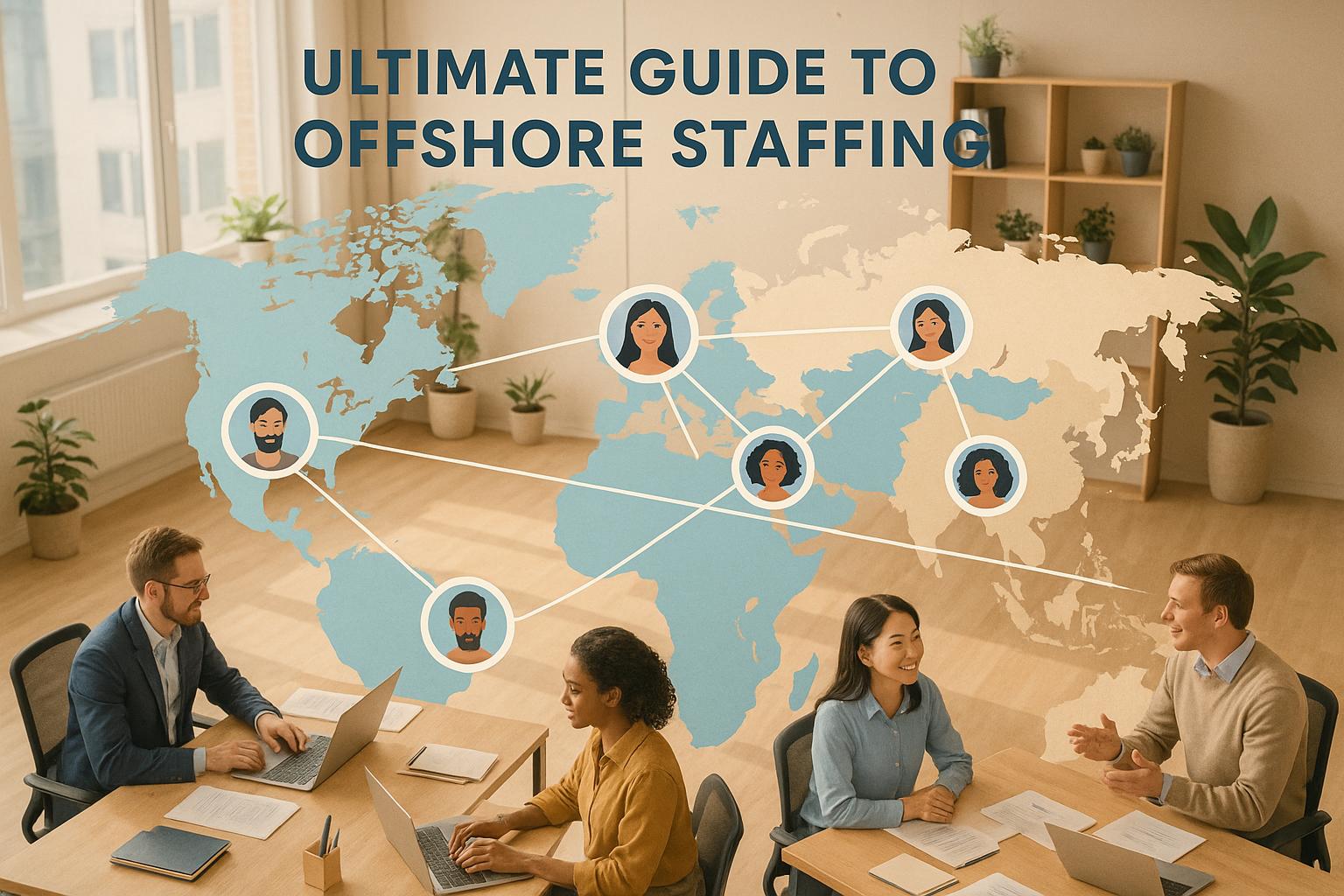
Offshore staffing is a smart way for businesses to reduce costs, access global talent, and build dedicated remote teams. Unlike traditional outsourcing, offshore staffing integrates remote professionals into your company’s operations, offering long-term, exclusive collaboration. Here’s what you need to know:
- What is Offshore Staffing? Hiring skilled professionals from other countries to work remotely as part of your team, with full control over hiring, training, and management.
- Why It’s Popular in the U.S.: Domestic hiring challenges, like high costs and talent shortages, make offshore staffing an attractive solution.
- Why South Africa? English proficiency, overlapping time zones, and a highly skilled workforce make South Africa a top choice for offshore staffing.
- Key Benefits:
- Lower labor and overhead costs.
- Access to a broader talent pool in fields like IT, marketing, and customer support.
- Flexibility to scale teams quickly based on business needs.
- Challenges and Solutions:
- Communication barriers: Use structured protocols and cultural training.
- Legal risks: Partner with agencies to handle compliance.
- Data security: Implement robust security measures like encryption and audits.
How Talently Helps: Talently simplifies offshore staffing by handling recruitment, compliance, payroll, and onboarding. For a starting fee of $2,500/month, you get access to top-tier South African talent, fully equipped and ready to work in U.S. time zones.
Offshore staffing isn’t just about cost savings – it’s about building a skilled, reliable workforce that supports business growth. If you’re considering offshore staffing, South African professionals through Talently might be the solution you need.
How does offshore staffing work?
Main Benefits of Offshore Staffing
Offshore staffing is reshaping how businesses operate, compete, and grow in today’s global economy.
Cost Savings and Financial Advantages
One of the most immediate benefits of offshore staffing is the significant reduction in labor and overhead costs. By outsourcing tasks, businesses can save on expenses like office space, equipment, and employee benefits. This freed-up capital can then be redirected toward critical areas such as product development, marketing campaigns, or business expansion.
Additionally, offshore staffing minimizes hidden costs often associated with domestic hiring, such as recruitment agency fees and lengthy interview processes. The streamlined hiring process not only saves time but also helps reduce employee turnover. This efficiency makes it easier for companies to grow their teams without taking on hefty additional expenses.
Access to a Larger Talent Pool
With domestic talent shortages becoming more common in fields like cybersecurity, software development, and digital marketing, many companies are turning to offshore staffing to bridge the gap. This approach provides access to highly skilled professionals from around the world.
Take South Africa as an example. The country produces a steady stream of qualified IT graduates, many of whom hold internationally recognized certifications. These professionals bring not only technical expertise but also diverse perspectives and innovative problem-solving skills, thanks to their experience across various industries and markets.
Moreover, their strong English proficiency ensures smooth communication in roles that require customer interaction, team collaboration, or presentations. This linguistic advantage enhances the overall reliability and effectiveness of offshore staffing solutions.
Scalability and Flexibility
Hiring domestically can be a slow and rigid process, but offshore staffing allows businesses to scale their teams quickly and adapt to changing demands. With access to cost-effective and diverse talent, companies can respond more efficiently to market shifts.
Offshore teams also enhance operational flexibility. By working across different time zones, they can extend a company’s business hours without requiring domestic staff to adjust their schedules. For example, businesses can hire specialized talent for short-term projects and then scale down once the work is completed. This adaptability is especially beneficial during times of economic uncertainty or when testing out new business strategies. It gives companies the ability to adjust staffing levels based on immediate needs and budget considerations, providing a level of agility that traditional hiring methods often lack.
Common Challenges and How to Solve Them
Offshore staffing comes with its share of challenges, but with the right strategies, these can be effectively managed.
Communication and Cultural Barriers
Even when offshore teams have strong English skills, subtle language differences and technical jargon can sometimes cause misunderstandings. Add to that the complexity of time zone differences, and you might find urgent communications and decisions delayed.
Work styles can vary too. For instance, American businesses often lean toward direct communication and quick decision-making, while other cultures may prefer formal processes and consensus-driven approaches. To address this, establish structured communication protocols early on. Set up specific overlap hours – 2 to 3 hours daily – for live collaboration, and rely on asynchronous tools like Slack or Microsoft Teams for less pressing matters.
Cultural orientation sessions can also work wonders. A quick training on American communication styles, meeting norms, and email etiquette can help offshore teams adjust. Similarly, your domestic team can benefit from understanding the offshore team’s cultural preferences and work habits.
Legal and Compliance Risks
Legal and compliance issues are another critical area to navigate. Employment laws differ significantly across countries, covering everything from worker classification and minimum wage to termination rules and benefits. Misclassifying offshore workers can lead to hefty penalties.
Tax regulations and intellectual property (IP) protection also vary by country, making it essential to draft contracts carefully and conduct compliance reviews.
One solution is to collaborate with specialized agencies that handle these complexities for you. These agencies act as the legal employer for your offshore staff, ensuring adherence to employment laws, tax obligations, and other regulations. They can also provide standardized contracts that safeguard your IP. Such contracts should clearly outline clauses on confidentiality, IP ownership, termination terms, and dispute resolution, including the applicable legal jurisdiction.
Data Security and Confidentiality
Data security is a major concern in offshore operations, especially when sensitive information is accessed across borders and networks with varying security standards. Offshore team members may work in environments where security measures differ, increasing the risk of vulnerabilities.
Compliance with data protection laws is non-negotiable, particularly when different countries have distinct rules about data privacy and residency. Managing access control across time zones can also create gaps in oversight.
To protect your data, adopt a zero-trust security model that includes strong authentication, multi-factor verification, and enterprise-grade encryption. Encrypt data both in transit and at rest, and use secure tools for communication and file sharing.
Conduct regular security audits of your offshore partners’ systems to identify and address potential weaknesses. Implement strict backup and recovery protocols to ensure critical data isn’t stored only on local devices. This also allows you to revoke access quickly if needed. Network monitoring tools can further enhance security by tracking access patterns and flagging unusual activity that might signal a breach.
How to Build and Manage Offshore Teams
Creating a successful offshore team takes more than just hiring remote workers. It’s about building a structured plan that aligns with your business objectives while ensuring your team is set up for long-term success.
Define Your Staffing Requirements
Before you start working with offshore partners, it’s crucial to clearly outline your staffing needs. This step lays the groundwork for everything – from the talent pool you’ll explore to the budget you’ll allocate.
Start by identifying the specific roles and skill sets you need. For example, do you require front-end developers skilled in React, back-end developers proficient in Python, or full-stack engineers? The same level of detail applies to other roles, like customer service representatives, QA testers, or digital marketers. Each position should have a well-defined job description that includes technical requirements, soft skills, and experience levels.
Next, decide on the duration of engagement. Are you looking for short-term support for a project, a long-term extension of your existing team, or help with tasks that have flexible timelines? Your answer will shape the type of contract and working relationship you establish.
Don’t forget to set a realistic budget. Account for salaries, benefits, and compliance costs, especially if regulations like HIPAA, SOC 2, or GDPR apply to your business.
Finally, assess your current workload. Identify repetitive tasks, time-consuming processes, or specialized work that’s straining your domestic team. Use this analysis, along with expected productivity levels, to estimate how many offshore team members you need.
Once your requirements are clear, focus on developing a structured onboarding process to ensure a smooth start.
Onboarding and Training Remote Teams
A strong onboarding process is critical for integrating offshore team members. Unlike in-office hires who can easily shadow coworkers or ask quick questions, remote employees need more structured support to succeed.
Design a comprehensive onboarding program that spans 30 to 60 days. This should cover everything from your company culture and workflows to introductions to key team members. Provide hands-on training with the tools and systems they’ll use daily.
In offshore setups, detailed documentation is a must. Create process guides, style manuals, and reference materials that team members can access anytime. This is especially helpful when time zone differences limit real-time communication.
During the first month or two, schedule daily 15-minute check-ins. These quick sessions help address any issues early, while also fostering a sense of connection with the broader team.
Consider assigning mentors or buddies from your existing team. Having a go-to person for questions and guidance helps new hires integrate faster and strengthens relationships across locations.
Once your team is onboarded, the next step is to leverage technology for seamless collaboration.
Using Technology for Team Collaboration
Technology plays a key role in managing offshore teams effectively. The right tools can make communication smoother, track progress, and ensure data security across different time zones.
Start with communication platforms that support both real-time and asynchronous collaboration. Slack and Microsoft Teams are great for daily chats, while Zoom and Google Meet work well for video calls and screen sharing. Organize dedicated channels for projects or departments to keep conversations focused.
For managing tasks and deadlines, use project management tools like Asana, Trello, or Jira. These platforms provide visibility into everyone’s workload and help you spot bottlenecks before they become problems.
Time tracking and productivity tools like Toggl, RescueTime, or Clockify can be helpful for monitoring work hours and identifying productivity patterns. However, focus on outcomes rather than micromanaging every minute.
When it comes to file sharing, prioritize tools with strong security features. Platforms like Google Workspace, Microsoft 365, or Figma (for design projects) ensure everyone has access to the latest versions of files while keeping your data safe.
Finally, implement performance monitoring systems that emphasize results. Set clear KPIs, use dashboards to track progress, and conduct structured performance reviews. Provide clear feedback and development plans to keep your team aligned with your goals. For added security, consider investing in VPNs and other tools to protect sensitive data, especially when team members work from various locations. This is essential if your work involves handling customer information or proprietary business data.
sbb-itb-7512dae
Using South African Talent with Talently
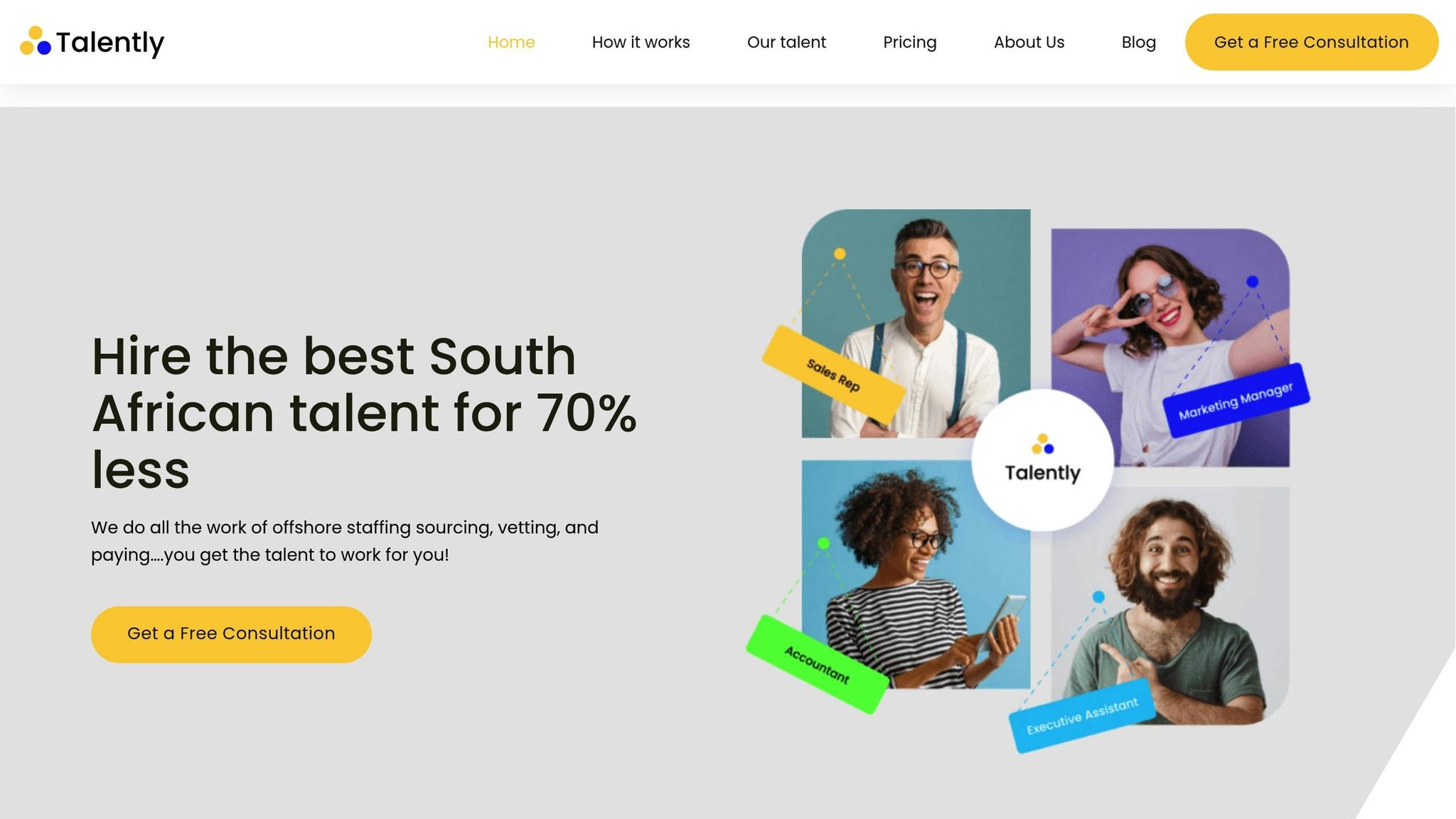
Strengthen your existing processes by tapping into a skilled and reliable talent pool. South African professionals have become a go-to choice for U.S. businesses, and Talently makes it easier than ever to access this incredible resource. With their help, you can streamline hiring and unlock measurable benefits through South African talent.
Why Choose South African Talent?
South African professionals bring a mix of native English fluency, cultural alignment, and cost efficiency to the table. Their strong command of English, combined with educational excellence, ensures they can seamlessly integrate into U.S.-based teams. On top of this, hiring from South Africa often results in significant cost savings, giving you access to top-tier expertise at a fraction of the usual expense.
How Talently Simplifies Offshore Staffing
Talently removes the hurdles of offshore hiring, handling everything from sourcing candidates to managing employment logistics. This hands-off approach ensures you can focus on your business while they take care of compliance, contracts, and more.
Here’s what makes Talently stand out:
- Top-Tier Talent: Talently rigorously screens candidates and works exclusively with the top 2% of South African professionals. This means you get pre-vetted individuals who are ready to hit the ground running.
- Hassle-Free Employment Management: They handle employment contracts, benefits, and payroll processing, ensuring compliance with both South African labor laws and U.S. business regulations. You can skip the legal headaches while maintaining peace of mind.
- Seamless Onboarding and Equipment Setup: Talently provides new hires with professional-grade tools, including laptops, so they’re fully equipped to contribute from day one. Plus, team members work in North American time zones (EST, CST, MST, or PST), making real-time collaboration effortless.
The Talently Process: Simple and Efficient
Talently makes the hiring process straightforward and stress-free. Here’s how it works:
- Free Consultation: It starts with a no-cost consultation to understand your needs.
- Candidate Shortlist: Talently presents 3–5 thoroughly vetted candidates for your consideration.
- End-to-End Management: Once you select a candidate, Talently handles all the paperwork, contracts, and onboarding. They ensure your new team member has access to the right systems, tools, and resources to start contributing immediately.
Even after onboarding, Talently keeps things simple. While you manage day-to-day tasks and communication with your South African team members, Talently takes care of payroll, benefits, and administrative tasks in the background.
Flexible Terms and Transparent Pricing
Talently’s month-to-month terms offer the flexibility to scale your team as your project needs change. While a minimum three-month commitment is recommended to allow for proper integration, their structure lets you adjust as needed. Pricing starts at $2,500 per month for a full-time, 40-hour work week. This rate includes everything – screening, contracts, payroll, benefits, and even equipment. Specialized roles may come at a higher cost, depending on the expertise required.
With Talently, you can take full advantage of South African talent without worrying about the complexities of international employment or compliance. It’s a comprehensive solution designed to help your business thrive.
Case Studies: Offshore Staffing Success Stories
Many U.S. businesses have successfully revamped their operations by leveraging offshore staffing with talented professionals from South Africa. These real-world examples highlight how such strategies can lead to measurable improvements. Let’s take a closer look at two standout success stories.
Case Study 1: Scaling a Marketing Agency
A marketing agency in Austin, Texas, faced mounting challenges due to high domestic labor costs, which made it difficult to deliver creative services without stretching their budget. To find a more affordable solution while maintaining high standards, the agency turned to Talently for offshore staffing options.
By bringing on South African specialists in graphic design and content marketing, the agency built a remote creative team that seamlessly integrated into its existing workflows. This setup allowed the agency to handle projects more efficiently, offer a broader range of creative services, and meet client demands with greater ease. The improved flexibility and quality of work played a key role in driving steady growth and enabling the agency to tackle a wider variety of projects.
Case Study 2: Improving Customer Support
An online retailer in Denver, Colorado, faced a different challenge: its growing customer base required round-the-clock support, but the in-house team could only operate during standard business hours. Expanding their domestic team to cover extended hours would have significantly increased costs.
The retailer partnered with Talently to onboard customer support representatives from South Africa. This offshore team not only reduced response times but also improved the efficiency of handling customer inquiries. Beyond day-to-day tasks, the team provided valuable insights that helped the retailer fine-tune internal processes and elevate overall service quality. With extended support hours, the retailer was able to better accommodate customers across time zones, enhancing satisfaction and loyalty.
These case studies showcase the advantages of offshore staffing with South African professionals through Talently. From reducing operational costs to boosting service quality and scalability, these examples illustrate how businesses can thrive by strategically expanding their teams.
Conclusion and Main Takeaways
Offshore staffing has come a long way from being just a cost-saving tactic. Today, it’s a smart way to build high-performing teams that drive business growth. In this guide, we’ve discussed how U.S. companies can tap into global talent pools to address staffing challenges, cut operational expenses, and scale more efficiently.
Why Offshore Staffing Makes Sense
Offshore staffing offers more than just financial savings. Companies typically reduce labor costs by 50–80%, gain access to skilled professionals with strong English proficiency, and enjoy the flexibility to scale up or down based on business needs. South African professionals, for example, bring the added benefit of working in a time zone that aligns well with U.S. business hours – about 6 hours ahead of Eastern Standard Time and 9 hours ahead of Pacific Time. This overlap allows for real-time collaboration and extended daily coverage.
With these advantages, offshore staffing becomes a practical and strategic choice for businesses aiming to grow smarter.
How Talently Simplifies Offshore Staffing
Partnering with Talently makes it easier to unlock these benefits. Their streamlined, four-step process takes the complexity out of international hiring, managing everything from compliance to administrative tasks.
Here’s how it works:
- Free talent consultation: Start with a no-cost consultation to understand your needs.
- Top-tier candidate sourcing: Within 1–2 weeks, Talently provides access to the top 2% of talent.
- You choose the candidate: Review and select the professional that fits your team.
- Talently handles the rest: From contracts to payroll, equipment, and benefits, they’ve got it covered.
“We do all the work of offshore staffing sourcing, vetting, and paying…you get the talent to work for you!”
For a fixed monthly fee starting at $2,500, you’ll have a full-time employee working exclusively for your business, 40 hours a week, in your time zone. They’ll attend meetings and contribute to projects as if they were sitting in your office.
Whether you’re looking to expand your team or enhance customer support, offshore staffing with Talently can help you achieve your goals while keeping operations efficient.
Curious about how offshore staffing can elevate your business? Schedule your free consultation with Talently today and see how South African talent can help you grow and succeed.
FAQs
What’s the difference between offshore staffing and traditional outsourcing, and how can offshore staffing benefit my business in the long run?
Offshore staffing involves hiring employees from another country who work directly for your business, whereas traditional outsourcing means contracting a third-party company – either locally or internationally – to handle specific tasks or projects on your behalf.
Choosing offshore staffing offers several long-term advantages. For starters, it can lead to cost savings by tapping into regions with lower labor expenses. It also provides access to a global talent pool, allowing you to find specialized skills that might be scarce locally. Plus, unlike outsourcing, offshore staffing gives you greater control over operations since you manage your team directly. Another key benefit? It can boost productivity by enabling your business to function across multiple time zones, ensuring quicker turnarounds and better responsiveness.
How can I ensure smooth communication and collaboration with my offshore team despite cultural and time zone differences?
To build strong communication and teamwork with your offshore team, start by establishing clear communication routines. Tools like project management software can help you track progress effectively, while chat platforms are great for quick updates. Make it a habit to schedule regular meetings and set up a feedback system that promotes open and honest conversations.
Keep time zone differences in mind by planning meetings at times that work for everyone, and consider rotating schedules if needed to ensure fairness. Creating an inclusive team culture is equally important – acknowledge and respect cultural differences, celebrate international holidays, and invite team members to share their unique insights. These steps can help you build a connected, efficient, and motivated remote team.
How can I protect my business’s data and comply with international laws when using offshore staffing?
To protect your business’s data and stay compliant with international regulations while working with offshore staff, start by putting strong data security measures in place. Use tools like encryption, multi-factor authentication, and role-based access controls to restrict access to sensitive information. Make it a habit to review and update permissions regularly to align with current team responsibilities.
Provide your offshore team with training on data protection practices. This should cover topics like securely handling sensitive information, spotting phishing attempts, and adhering to compliance requirements such as GDPR or CCPA. It’s equally important to ensure your offshore partner operates with secure IT infrastructure, including firewalls, up-to-date antivirus software, and encrypted communication tools. Regular audits can help uncover vulnerabilities and ensure your team meets industry standards.
Related Blog Posts
Ready to build your dream team?
Book a free consultation and get your first candidate shortlist within 48 hours.
No upfront fee • Only pay if you hire