Ultimate Guide to Remote Medical Admin Teams
 16 min read
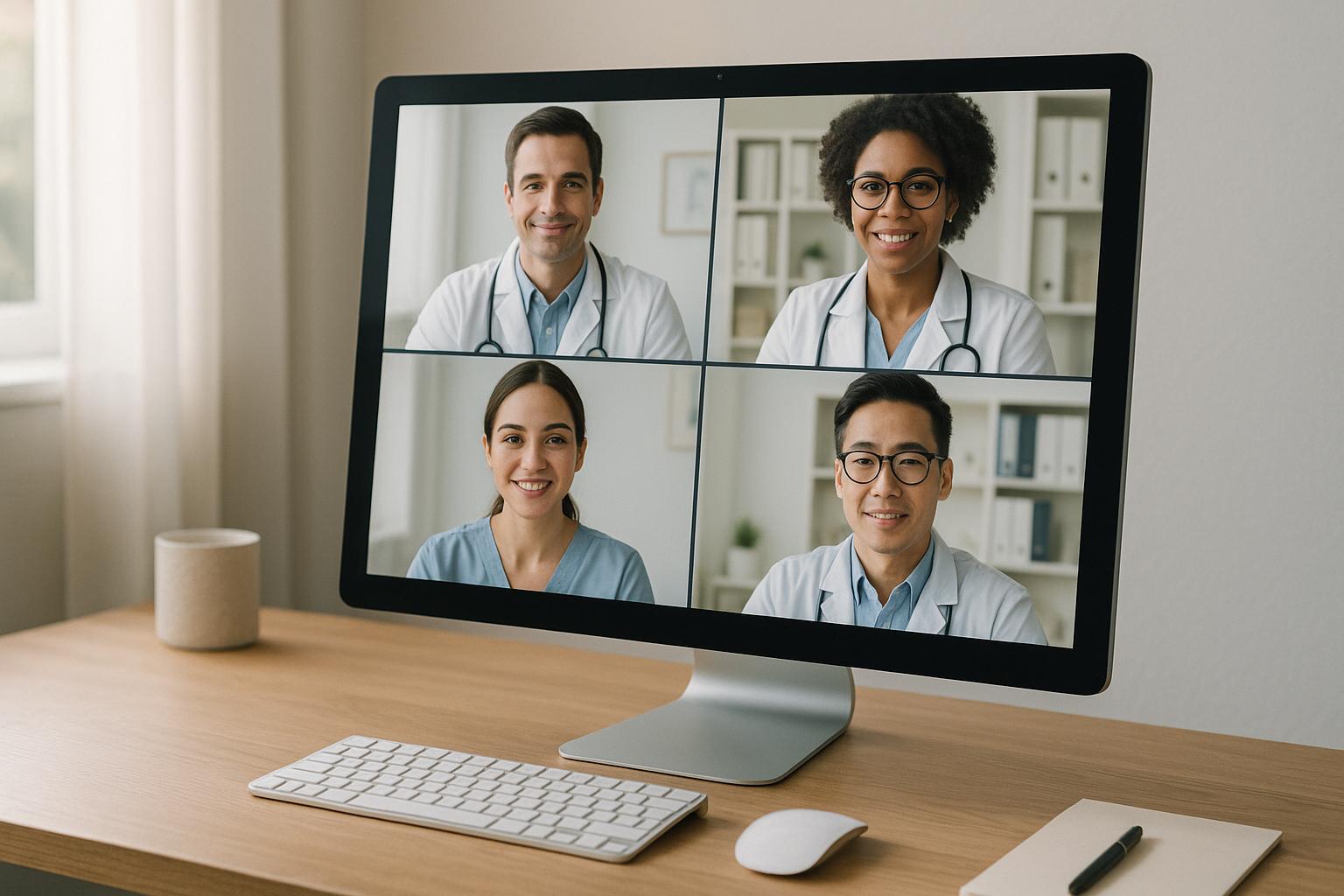
Remote medical admin teams are transforming healthcare operations by managing tasks like scheduling, billing, and records without the need for physical offices. These teams reduce costs, improve efficiency, and free up clinical staff to focus on patient care. Here’s a quick summary:
- Why Remote Teams Matter: They save 20–40% on admin costs and boost efficiency by 30%, according to studies.
- Key Roles: Patient scheduling coordinators, billing specialists, insurance clerks, and records managers are essential positions.
- Skills Needed: Strong organizational abilities, medical knowledge, HIPAA compliance, and tech proficiency.
- Technology: Tools like EHR systems, billing software, and secure communication platforms are critical.
- Offshore Talent: South Africa offers highly educated, English-speaking professionals at up to 70% lower costs compared to U.S. staff.
- Support Services: Platforms like Talently simplify hiring and managing remote staff with fixed rates starting at $2,500/month.
Remote admin teams are not just cost-effective – they’re a practical solution to modern healthcare challenges, offering flexibility and improved operations.
Navigating Remote Medical Admin | Embracing the Future of the Medical Office
Key Roles and Responsibilities in Remote Medical Administration
Remote teams play a critical role in keeping healthcare operations running smoothly. To build an effective team that ensures compliance and delivers excellent patient care, it’s essential to understand the specific roles and responsibilities involved.
Core Roles in a Remote Medical Admin Team
Patient Scheduling Coordinators are often the first point of contact for patients. They handle appointment bookings, send reminders, and manage schedule changes. Using electronic scheduling systems, they streamline provider calendars to reduce no-shows. They also coordinate across departments to ensure patients receive the care they need during their visits.
Medical Billing Specialists deal with the complexities of healthcare claims, coding, and payment processing. Their tasks include submitting insurance claims, following up on denials, and helping patients set up payment plans. With expertise in coding systems like ICD-10 and CPT, they help healthcare providers secure accurate and timely reimbursements.
Insurance Verification Clerks confirm patient insurance coverage and secure pre-authorizations before appointments or procedures. By verifying benefits, copayments, and coverage limits with insurance companies, they help prevent billing issues and ensure patients understand their financial responsibilities upfront.
Records Management Professionals are responsible for maintaining and updating electronic health records (EHRs). They ensure patient information is accurate, secure, and accessible to authorized personnel. Their duties include data entry, document scanning, and securely transferring records.
For a mid-sized healthcare practice, a typical remote team might include two patient scheduling coordinators, one medical billing specialist, one insurance verification clerk, and one records manager.
Defining these roles is just the beginning. Ensuring the team has the right skills is equally important.
Required Skills and Knowledge
Remote medical admin staff need a solid foundation in healthcare and strong organizational abilities. Here are some key skills:
- Proficiency in medical terminology is essential for understanding patient conditions, treatments, and procedures. This ensures accurate communication with clinical staff and proper documentation.
- Attention to detail is critical to avoid errors in patient records, billing codes, or insurance information, which can lead to claim denials or compliance issues.
- Organizational skills help remote workers juggle multiple tasks, such as managing patient calls, processing claims, and updating records, all while meeting deadlines.
- Excellent communication skills are vital for interacting with patients, insurance companies, and healthcare providers. In a remote setting, clarity is especially important when explaining complex medical or insurance details.
- Knowledge of HIPAA regulations ensures patient data is handled securely. Remote workers must understand how to protect sensitive information, including using approved communication platforms and maintaining confidentiality in a home office setting.
- Familiarity with EHR systems, billing software, and secure communication tools is necessary for daily tasks. Since each practice may use different software, adaptability and quick learning are key.
In 2021, CareVMA Health introduced a remote virtual administrator program for a mid-sized clinic. This initiative reduced administrative costs by 20% and increased patient satisfaction scores by 15% within six months. The program included onboarding remote staff for scheduling, billing, and records management, along with regular performance reviews and HIPAA compliance training.
Matching these skills with clearly defined roles sets the stage for a successful remote medical admin team.
Creating Clear Job Descriptions
With roles and skills defined, clear job descriptions are essential for aligning expectations and improving productivity. They help eliminate confusion, ensure all tasks are covered, and set measurable performance standards.
Job tasks should be clearly outlined, such as responding to patient inquiries within 24 hours, scheduling appointments, and sending reminders. Include measurable outcomes, like maintaining a 95% clean claim rate, to provide clear goals.
Qualifications should specify both technical and soft skills required for the role. Be clear about necessary software experience, certifications, and years of relevant experience. If HIPAA training is required, indicate whether the practice will provide it or if candidates need to be pre-certified.
Reporting structures are especially important in a remote setup. Clearly state who the employee reports to, how often check-ins occur, and which communication channels are used for different issues.
Performance metrics provide a way to measure success objectively. Common key performance indicators (KPIs) include appointment scheduling accuracy, claim processing turnaround times, patient satisfaction scores, and adherence to documentation standards.
Daily task examples give candidates a realistic view of the job. For example, a patient scheduling coordinator might review schedules for the next day, contact patients to confirm appointments, update contact information, and coordinate with clinical staff on special requirements.
Finally, include details about the tools and technology required for the role. Specify whether the practice provides software licenses, hardware, or internet speed requirements for remote work.
Clear job descriptions not only help attract qualified candidates but also reduce turnover. When remote workers understand their responsibilities and expectations, they are more likely to succeed and stay with the organization long-term.
Tools and Technologies for Remote Teams
Building the right technology stack is key to keeping remote healthcare operations efficient while ensuring patient data remains secure. In this field, tools must not only boost productivity but also adhere to strict data protection standards. Let’s take a closer look at how project management tools can achieve both.
Project Management Tools
Project management platforms like monday.com enable remote teams to stay on top of deadlines and manage tasks effectively, all while maintaining robust security measures. For example, monday.com’s AI Trust Center provides detailed information about its enterprise-grade security certifications. Healthcare teams should focus on selecting tools with advanced security features and take advantage of vendor resources to fully understand the safety measures in place. This ensures compliance with data protection requirements while maintaining operational efficiency.
sbb-itb-7512dae
Best Practices for Managing Remote Medical Admin Teams
Effectively managing remote medical admin teams involves more than just assigning tasks. It requires clear processes, consistent communication, and a focus on performance tracking to ensure the team operates smoothly.
Onboarding and Training
A well-structured onboarding process can make a huge difference. Research shows it can cut errors by 50% and improve retention rates by 30%. To achieve this, start with a comprehensive orientation that covers tool training and compliance education.
Give new hires immediate access to secure systems and provide them with a clear task checklist to help them hit the ground running. Virtual training sessions can be conducted using HIPAA-compliant platforms like Zoom for Healthcare or Google Workspace. Just make sure all staff sign confidentiality agreements before accessing any patient data.
Consider implementing a mentor system to speed up practical learning. This is especially useful when onboarding offshore team members, as it helps address differences in systems and cultural nuances. Establish clear communication protocols early on to maintain team cohesion.
Compliance training is non-negotiable in the medical field. All team members should receive thorough initial training on HIPAA regulations, followed by annual refresher sessions. Keeping records of certifications ensures your team is audit-ready.
Communication Protocols
Good communication is the backbone of any remote team. Set up weekly video meetings, define response time expectations, and assign specific communication channels for different types of messages. For example, urgent scheduling changes can be handled via Slack or Microsoft Teams, while email with read receipts can be used for policy updates.
Aligning team members to North American time zones ensures smooth collaboration. As Talently notes, “Language – Native English Speakers. No communication issues” and “Time Zone – They will work your North American time zone”.
Daily stand-ups and structured weekly meetings help keep everyone on the same page. Documenting decisions and updating shared communication platforms ensures that even those who miss a meeting stay informed.
Performance Management and Feedback
Once training and communication are in place, the focus shifts to performance. Set SMART goals to drive accountability, such as reducing scheduling errors by 20% within three months or achieving a 90% patient satisfaction rate.
Leverage performance management tools like BambooHR or Workday to track key metrics such as response times, appointment completion rates, and overall quality. These tools provide managers with data-driven insights to evaluate team performance.
Regular one-on-one check-ins are essential for progress reviews and immediate feedback. Monthly performance reviews centered on specific KPIs create a consistent rhythm for evaluations. Whether feedback is delivered in these reviews or through peer assessments, timely input encourages ongoing improvement.
Self-assessments and anonymous surveys can also uncover areas for growth. For example, you could implement monthly feedback rounds where team members share one accomplishment and one area they’d like to improve. This kind of open dialogue fosters a culture of continuous development.
To ensure smooth integration, require a three-month commitment from new hires. Building trust and maintaining morale in a remote environment takes effort. Recognize achievements regularly, communicate practice goals transparently, and address staff concerns promptly. These steps help create a positive and productive work environment that supports both high performance and long-term retention.
Leveraging Offshore Staffing with South African Talent
Healthcare organizations across North America are increasingly turning to South African professionals for remote medical administrative roles. Why? The combination of reduced costs, aligned work culture, and specialized skills makes this talent pool an appealing choice for practices aiming to expand their operations efficiently. By tapping into this resource, organizations can cut expenses while boosting administrative productivity – a theme that runs throughout this guide.
Advantages of South African Talent
One of the biggest draws is cost savings. Hiring South African professionals can reduce expenses by 40%–60% compared to employing U.S.-based staff. This difference comes from favorable exchange rates and a lower cost of living in South Africa, allowing healthcare practices to stretch their budgets while accessing highly skilled talent.
Communication is another significant advantage. South Africans are native English speakers with neutral accents, which eliminates the communication challenges often seen in offshore staffing. Their language skills extend to understanding complex medical terminology and meeting U.S. documentation standards, ensuring smooth interactions and accurate work.
Time zone compatibility is also a major plus. South African professionals operate 6–9 hours ahead of U.S. Eastern to Pacific Time, offering plenty of overlap for real-time collaboration and same-day task completion. Unlike other offshore options, where night shifts or delayed responses are common, South African staff can work regular business hours while serving North American clients.
South Africa’s education system is robust, with 7 of Africa’s top 10 universities located there. This academic foundation produces professionals with the analytical abilities and attention to detail needed for healthcare administration. Many also have experience working with international clients, making them well-versed in U.S. healthcare requirements and compliance standards.
Additionally, South Africa’s role as a business hub in Africa has fostered a workforce with exposure to international business practices. Professionals from this region often bring a strong work ethic and familiarity with Western business norms, making them a seamless fit for U.S. healthcare organizations.
| Feature | South African Talent | Domestic U.S. Talent |
|---|---|---|
| Cost | Up to 60% lower | Higher |
| English Proficiency | High (neutral accent) | Native |
| Time Zone Overlap | Substantial (EST/CST overlap) | Full |
| Education & Training | Strong, globally recognized | Strong |
| Cultural Alignment | High (Western business culture) | High |
| Compliance (HIPAA, etc.) | Available with training | Standard |
With these advantages, it’s clear why South African talent is gaining traction. And that’s where Talently steps in to simplify the process.
How Talently Simplifies Offshore Staffing
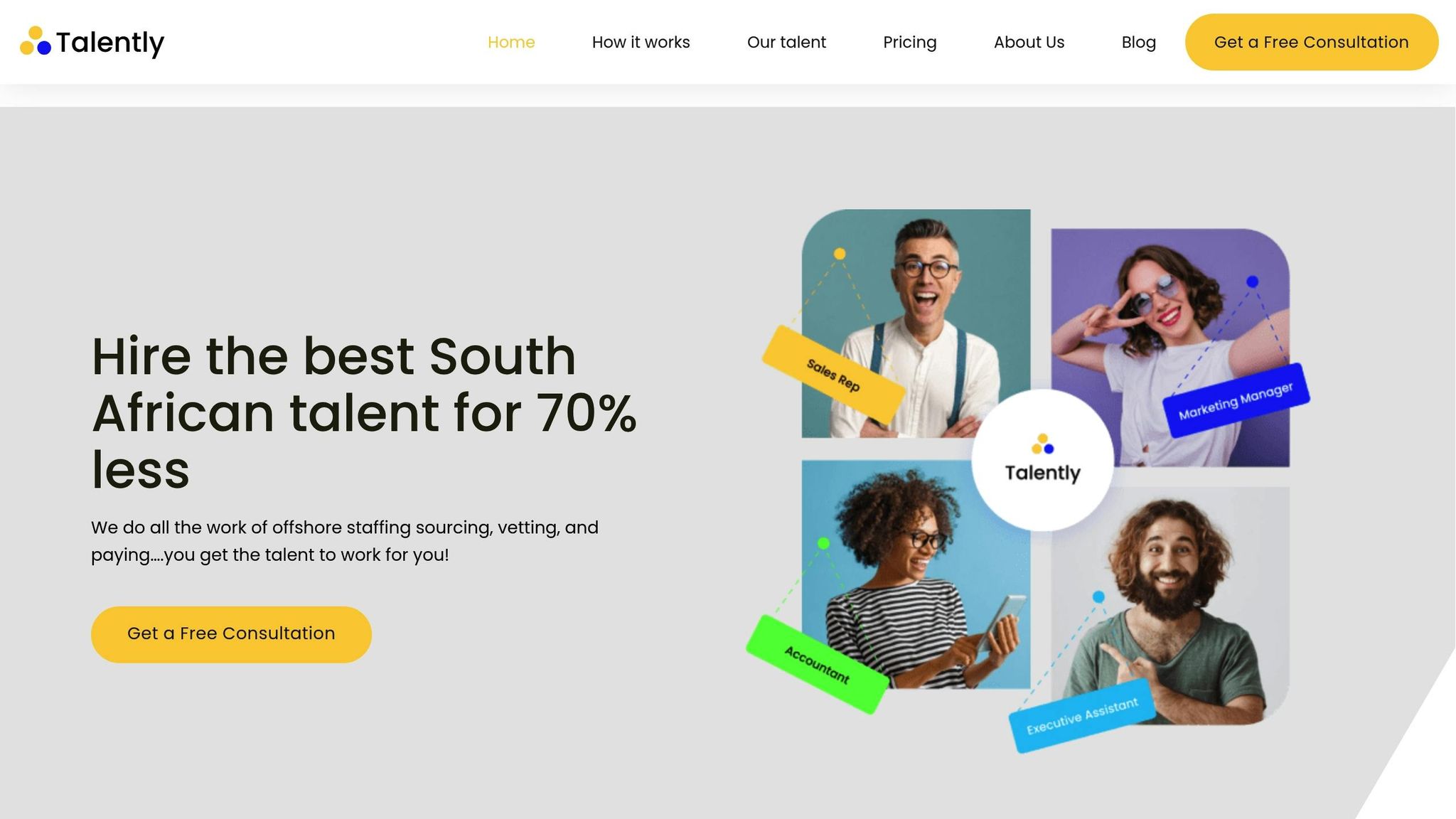
Navigating offshore hiring in healthcare can be tricky, given the strict compliance and quality standards. Talently makes it easier by managing every step of the process, from sourcing candidates to handling payroll.
The process starts with a free consultation to identify your staffing needs. Within 1–2 weeks, Talently provides a shortlist of the top 2% of South African candidates for your role. This selection process includes thorough skills assessments, experience checks, and English proficiency testing to ensure candidates meet U.S. healthcare standards.
Once you’ve reviewed the options, Talently organizes interviews with pre-vetted professionals. After you make your choice, Talently takes care of all the administrative details, including contracts, benefits, and local compliance. They even supply equipment like laptops, so your new hire is ready to get started immediately.
Talently’s fixed-rate monthly pricing model removes budgeting headaches. For a full-time employee working 40 hours per week in North American time zones, rates start at $2,500 per month, covering all employment-related costs. Specialized roles, such as medical coding or compliance, may have higher rates, but pricing remains straightforward with no hidden fees.
Beyond hiring, Talently provides ongoing support. They handle payroll, benefits, and performance monitoring, giving you the freedom to focus on your core operations. They also ensure all staff are trained in HIPAA compliance and U.S. healthcare protocols before they begin work.
For organizations concerned about onboarding, Talently suggests a minimum three-month commitment to allow for proper integration and relationship building. However, the monthly terms offer flexibility to adjust as your needs change. Importantly, the professionals you hire work exclusively for your organization, ensuring their full attention is dedicated to your practice’s goals and culture.
This comprehensive approach has helped healthcare practices achieve more than just cost savings. Many report improved billing accuracy, quicker patient response times, and overall better administrative efficiency – results that make a real difference in day-to-day operations.
Conclusion
Building an effective remote medical admin team requires more than just hiring the right people – it demands clear communication, thorough onboarding, well-defined roles, HIPAA-compliant systems, and measurable KPIs. This approach not only helps reduce costs but also addresses the growing staffing challenges in today’s healthcare landscape.
Remote medical administration is no longer just an option; it’s becoming a cornerstone strategy for healthcare organizations. With the U.S. healthcare virtual assistant market expected to grow at a staggering 24.7% CAGR from 2022 to 2030, many practices adopting remote admin teams have already seen up to a 30% reduction in administrative expenses.
Tapping into international talent brings even more advantages. South African professionals, for example, offer native English fluency, strong educational backgrounds, and time zones that align well with U.S. operations – making collaboration seamless. Additionally, working with an offshore staffing platform can result in up to 70% savings compared to hiring domestically.
For practices looking to streamline this process, Talently offers a solution by connecting organizations with the top 2% of South African candidates. They handle payroll and compliance, with fixed rates starting at $2,500 per month. This allows healthcare providers to budget confidently while benefiting from dedicated staff who work exclusively for their teams.
It’s important to view the creation of remote admin teams as a strategic investment rather than just a way to cut costs. By following best practices – such as investing in robust onboarding, holding weekly virtual meetings, and utilizing the right tech platforms – organizations can see improvements in billing accuracy, faster patient response times, and smoother administrative workflows.
Healthcare practices that prioritize building strong remote admin teams today will position themselves to scale operations and deliver better patient care well into the future.
FAQs
What are the advantages of hiring remote medical admin teams from South Africa over U.S.-based teams?
Hiring remote medical admin teams from South Africa brings a range of benefits to the table. One of the biggest advantages is cost savings – companies can save as much as 70% compared to hiring U.S.-based teams. Beyond the financial aspect, South African professionals are native English speakers, which ensures smooth and effective communication. They also have a reputation for being highly professional and dedicated to their work.
Another standout feature is their ability to align with North American time zones. This means real-time collaboration is not just possible but seamless, making day-to-day operations much more efficient. With this blend of affordability, language fluency, and time zone compatibility, South African talent stands out as a smart choice for building a remote medical admin team.
How can healthcare organizations maintain HIPAA compliance and protect data security with remote medical admin teams?
To maintain HIPAA compliance and protect sensitive data while collaborating with remote medical admin teams, healthcare organizations need to adopt stringent measures and utilize secure technologies. Here are some essential practices:
- Use HIPAA-compliant tools: Ensure all communication – whether through emails, video calls, or file sharing – is conducted using platforms that meet HIPAA standards.
- Provide ongoing training: Regularly educate remote team members on HIPAA regulations and best practices for secure data handling.
- Limit access: Restrict access to patient information based on specific job roles, and rely on encrypted systems for storing and transmitting data.
Performing regular audits and confirming that team members operate in secure environments are additional steps that can reduce potential risks. Partnering with a staffing platform experienced in compliance can also simplify the process of building a secure and efficient remote team.
What tools and technologies are essential for managing a remote medical administrative team effectively?
To effectively manage a remote medical admin team, having the right tools for communication, collaboration, and organization is essential. Video conferencing platforms like Zoom or Microsoft Teams make virtual meetings straightforward, while team messaging apps such as Slack keep communication flowing smoothly. For sharing documents and collaborating in real time, cloud-based solutions like Google Workspace or Microsoft Office 365 are incredibly useful. On top of that, secure project management tools like Trello or Asana can help you stay on top of tasks and deadlines.
Using these tools not only simplifies day-to-day operations but also strengthens communication and boosts your team’s overall productivity.
Related Blog Posts
Ready to build your dream team?
Book a free consultation and get your first candidate shortlist within 48 hours.
No upfront fee • Only pay if you hire