
South African Talent: Background Check Best Practices
 21 min read

When hiring talent from South Africa, background checks are non-negotiable to ensure legal compliance, mitigate risks, and build trust. South Africa’s strict data privacy laws (POPIA) and unique hiring norms require North American employers to follow specific steps to avoid penalties, which can reach $540,000 USD or 10 years of imprisonment for violations. Here’s what you need to know:
- Consent is mandatory: Explicit written consent must be obtained from candidates before any checks.
- Focus on job relevance: Only conduct checks directly related to the role, such as criminal records for financial jobs or qualification verifications for regulated professions.
- Use accredited providers: Work with verified screening agencies to ensure compliance with South African laws.
- Respect privacy norms: South Africa’s history emphasizes non-discrimination and transparency in hiring practices.
- Data security is critical: Protect candidate information with encryption, limited access, and clear retention policies.
Failing to follow these guidelines can lead to legal issues, reputational damage, and missed opportunities to hire qualified professionals. By adhering to South African regulations and cultural expectations, you can successfully onboard skilled remote talent while maintaining compliance.
South African Legal and Cultural Requirements
Navigating South Africa’s legal and cultural landscape requires careful attention to its strict data privacy laws and diverse societal dynamics, especially when conducting background checks.
Protection of Personal Information Act (POPIA) Overview
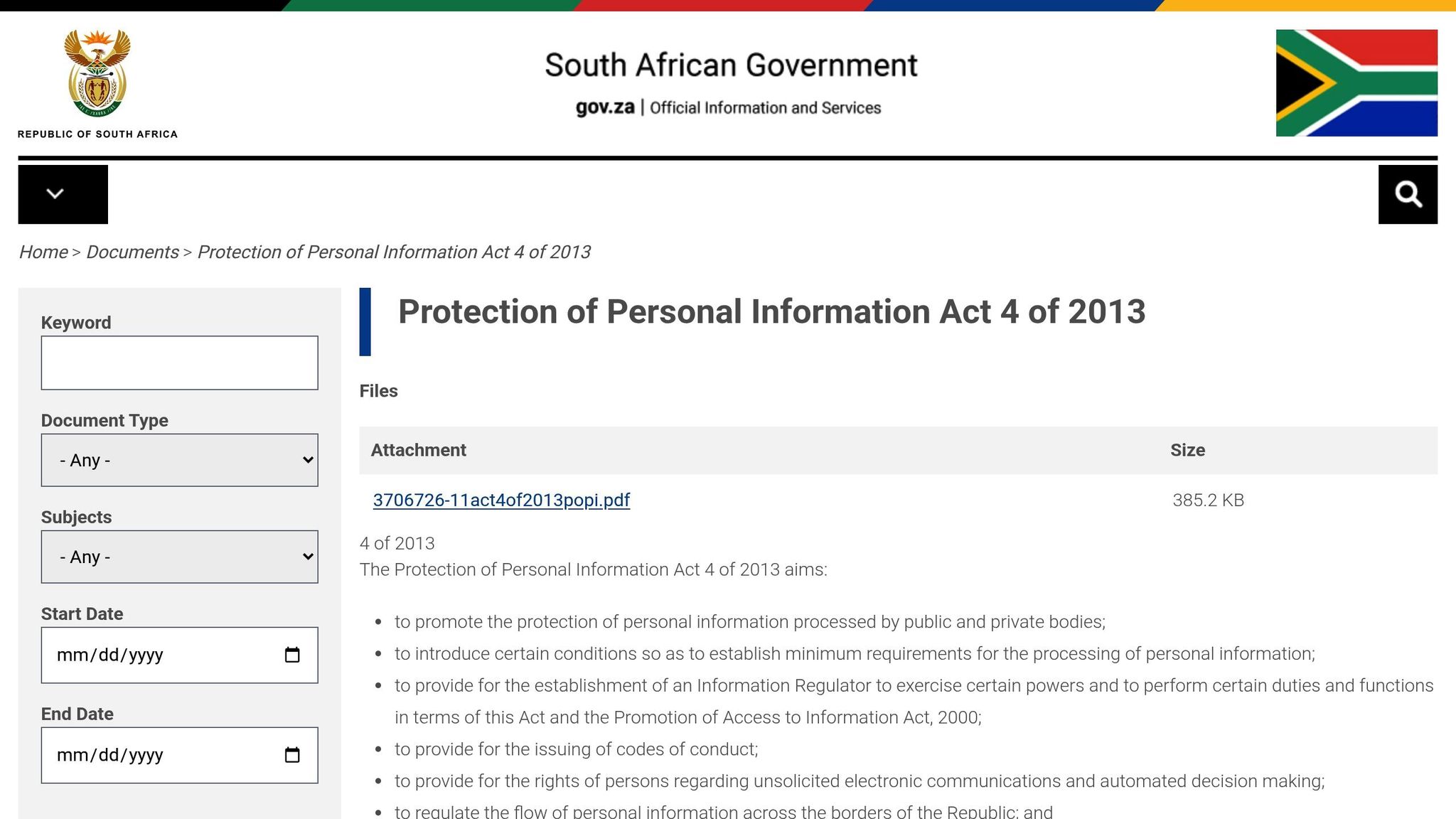
South Africa’s Protection of Personal Information Act (POPIA) is the cornerstone of the country’s data privacy framework. Under POPIA, employers must secure explicit consent from candidates before collecting personal information. This includes clearly explaining what data will be gathered, why it’s needed, and how it will be used. Employers are also limited to collecting information directly relevant to the job role. These measures are designed to ensure that background checks are conducted with both legal compliance and respect for candidates.
POPIA also requires robust data security practices during the background check process. This includes encrypting data storage, limiting access to authorized personnel, and using secure protocols for data transmission. Employers must also have clear data retention policies that specify how long information will be kept and ensure its secure destruction once it’s no longer needed.
Consent under POPIA isn’t just a checkbox. Employers are required to provide candidates with detailed information about the scope of the background check. Candidates must also have the opportunity to ask questions or opt out. Many digital platforms now offer specialized tools to make this consent process easier while staying within legal boundaries.
Non-compliance with POPIA carries heavy penalties. Fines can reach up to $540,000 USD, and willful violations may result in imprisonment for up to 10 years.
Cultural Considerations in Recruitment and Vetting
South Africa’s unique cultural and historical context significantly shapes recruitment and vetting practices. The legacy of apartheid has led to a strong emphasis on privacy, equality, and non-discrimination in hiring.
Building trust is essential when conducting background checks in South Africa. Employers should take the time to explain why each step of the process is necessary, balancing business needs with respect for candidate dignity.
The Employment Equity Act (EEA) reinforces these principles by prohibiting unfair discrimination based on factors like race, gender, or age. This means background checks must be applied consistently across all candidates and should not be used to exclude individuals based on irrelevant details. For instance, a minor criminal offense unrelated to the job should not automatically disqualify a candidate.
South Africa’s multilingual society also influences how background checks are communicated. While many professionals are fluent in English, it’s important to ensure that explanations are clear and considerate of cultural nuances. Employers should avoid making assumptions about local practices and strive to demonstrate respect for South African norms.
Privacy holds particular importance in South Africa, shaped by historical experiences with surveillance and discrimination. Employers must strike a balance between gathering necessary information and respecting these sensitivities. When handled poorly, background checks can feel invasive rather than professional, undermining trust.
Regulatory and Oversight Bodies
Several key organizations oversee compliance with background check regulations in South Africa. Familiarity with these bodies is crucial for ensuring proper due diligence when hiring South African talent.
- The Information Regulator enforces POPIA across all sectors. It investigates complaints, conducts audits, and imposes penalties for violations. In recent years, its enforcement efforts have intensified.
- The South African Qualifications Authority (SAQA) manages the verification of educational credentials and maintains a public register to identify fraudulent qualifications. Its “naming and shaming” process acts as both a verification tool and a deterrent against misrepresentation.
- The South African Police Service (SAPS) provides official criminal record certificates through authorized channels, ensuring that criminal background checks comply with privacy standards.
- Industry-specific regulatory bodies, such as the Health Professions Council of South Africa and the Law Society, oversee professionals in fields like medicine and law, offering their own systems for verification and disciplinary records.
The Employment Equity Amendment Act 4 of 2022 introduced additional compliance requirements, particularly for public sector contracts. Employers must now obtain Employment Equity Certificates of Compliance for certain roles.
Recent updates, like the POPIA Amendment Regulations of April 2025, have increased personal criminal liability for violations and emphasized careful handling of biometric data.
Understanding the timelines and processes of these regulatory bodies is equally important. For instance, SAQA verification for international qualifications can take several weeks, while SAPS criminal record checks are typically completed within 10–15 business days. Aligning hiring schedules with these timelines ensures a smoother process while maintaining compliance.
Types of Background Checks for South African Talent
When hiring professionals in South Africa, conducting thorough background checks is crucial for staying compliant with legal requirements and safeguarding your business. Each type of check plays a specific role and adheres to South Africa’s legal framework. Let’s break down the key verification types, their legal implications, and practical considerations.
Criminal Record Checks
Criminal record checks are a cornerstone of risk management for many industries and will become mandatory in 2025. These checks rely on South Africa’s Automated Fingerprint Identification System (AFIS) to match candidate fingerprints with the South African Police Services (SAPS) database. Employers must secure written consent from candidates and ensure the check is relevant to the job role, as required by the Employment Equity Act. For instance, a theft conviction might disqualify someone from a finance position but may not hold the same weight in construction.
These checks are especially important in fields like financial services, childcare and education, government and law enforcement, and private security. Employers should evaluate each candidate’s criminal history on a case-by-case basis rather than enforcing blanket exclusion policies. This approach is particularly important given the 32% year-on-year increase in reported fraud cases in South Africa. A notable example of the consequences of poor vetting is a Labour Court case where failures in compliance cost NHLS executives R22.48 million (around $1.2 million USD).
By integrating criminal record checks into your hiring process, you can reduce risks and ensure compliance with legal and industry standards.
Verification of Qualifications and Employment History
Verifying academic credentials is another critical step, handled by the South African Qualifications Authority (SAQA). SAQA maintains a register of recognized qualifications and actively works to deter fraud through a public naming and shaming process. The National Qualifications Framework Amendment Act 12 of 2019 enforces strict penalties for misrepresentation of qualifications. If you’re verifying international credentials, note that this process can take several weeks, so plan accordingly.
Employment history verification focuses on confirming previous roles, employment dates, and performance records. Any discrepancies uncovered during this process must be reported by employers. As with all background checks, these steps must comply with the Protection of Personal Information Act (POPIA), which mandates candidate consent and secure data handling.
In addition to verifying qualifications and work history, it’s essential to establish the candidate’s identity and professional standing.
Identity, Credit, and License Verifications
Identity verification is a foundational part of any background check. Confirming a candidate’s South African ID number or passport against government records establishes their legal identity and right to work, while also guarding against identity theft.
Credit checks, on the other hand, are more specific and must align with the National Credit Act. These checks are typically reserved for roles with direct financial responsibilities, such as positions in banking or accounting. Employers must justify the relevance of a candidate’s credit history to the role and obtain their consent before proceeding.
For regulated professions like healthcare, law, engineering, or architecture, verifying professional licenses is essential. This involves checking the candidate’s license with the appropriate regulatory body, such as the Health Professions Council of South Africa or the Law Society. Each organization maintains its own verification process and records of disciplinary actions.
It’s worth noting that polygraph tests are not permitted and could expose employers to legal risks.
To ensure compliance, all verification processes should include strong data protection measures. Candidate information must be stored securely, with access restricted to authorized personnel. Clear policies for data retention and destruction should also be in place to meet POPIA requirements.
The growing adoption of online and biometric verification methods in 2025 is streamlining the background check process, making it faster and more secure.
Step-by-Step Background Check Process
To ensure compliance with POPIA while respecting both legal obligations and candidates’ rights, follow these detailed steps for conducting background checks.
Getting Candidate Consent
Start by obtaining explicit written consent from the candidate. This consent should clearly outline the checks you’ll perform, the data you’ll collect, how it will be used, and whether third parties will have access. Under POPIA, failing to meet these requirements can lead to fines of up to $540,000 USD (R10 million) or even 10 years in prison for violations.
Make sure the consent form reflects the specific requirements of the role. For instance, hiring a financial analyst might require checks like criminal records, qualification verification through SAQA, and credit reports. Clearly explain why each check is relevant to the job.
Digital tools can streamline this process by creating an auditable trail, which speeds up hiring while maintaining compliance.
Document every detail of the consent process, including the time, method, and scope of the agreement. These records are critical for audits and legal protection.
Once consent is secured, align the background checks with the job’s specific requirements.
Ensuring Job Relevance and Using Authorized Providers
Conduct only those checks that are directly tied to the responsibilities of the position. For example, a credit check might be necessary for a financial role but irrelevant for a graphic designer. POPIA strictly prohibits indiscriminate checks or the collection of unnecessary information.
Develop a clear framework that links job roles to the appropriate checks. For example:
- A customer service position might require employment history verification but not a credit check.
- A management role might necessitate both criminal and qualification checks.
When selecting a background screening provider, choose one accredited by the relevant regulatory bodies and experienced in POPIA compliance. Look for providers that use secure systems, such as the Automated Fingerprint Identification System (AFIS) for criminal record checks, and have robust data protection policies in place.
Before finalizing a provider, review their compliance credentials, data security measures, and retention policies. A trustworthy provider will willingly share this information and demonstrate their understanding of POPIA requirements.
Once your provider is in place, shift your focus to proper data management.
Documenting and Protecting Data
All digital data should be encrypted, and paper records must be stored securely. Restrict access to authorized personnel only and establish clear retention policies. Once data is no longer needed, ensure it is permanently deleted or securely shredded, as required by POPIA.
Keep detailed records of the entire process, including:
- Consent forms
- Data collected
- Retention schedules
- Deletion actions
These records not only show your commitment to compliance but also protect your business in case of disputes about your practices.
The 2025 POPIA Amendment Regulations have heightened personal liability for mishandling data, particularly biometric information. With fraud incidents in South Africa rising by 32% year-over-year, maintaining thorough documentation and secure data practices is more important than ever. Proper data management isn’t just about compliance – it’s a critical safeguard for your business.
sbb-itb-7512dae
Common Mistakes and How to Avoid Them
When conducting background checks on South African candidates, employers often stumble into pitfalls that can lead to legal trouble, tarnished reputations, or missed opportunities to hire top talent. Navigating these challenges requires a solid understanding of common missteps and how to steer clear of them.
Common Background Check Errors
One of the most serious mistakes employers make is starting background checks without securing written consent. POPIA mandates that candidates provide explicit, documented permission, outlining what data will be collected, how it will be used, and who will have access to it. Verbal agreements or a general consent clause in an application form simply don’t cut it – they don’t meet the legal standard.
Another frequent error is conducting checks that are irrelevant to the job. For example, running a credit check on a graphic designer or asking for a driving record from someone applying for a remote customer service role is both unnecessary and intrusive. These actions not only violate privacy laws but can also lead to discrimination claims and regulatory penalties.
Some employers also fall into the trap of using unaccredited screening providers. While these services may seem cost-effective, they often lack proper data protection protocols and may deliver inaccurate results. This increases the risk of hiring errors, legal liabilities, and non-compliance with regulations.
A particularly harmful practice is applying blanket exclusions for candidates with criminal records or credit issues, regardless of the relevance to the job. Automatically disqualifying someone for a minor, unrelated offense can lead to legal challenges under South Africa’s anti-discrimination laws and may exclude otherwise qualified candidates from consideration.
These mistakes don’t just open the door to lawsuits – they can also result in financial losses and damage your company’s reputation.
Legal and Compliance Risks
Violating POPIA can result in steep penalties, including fines of up to $540,000 USD (R10 million) and imprisonment for up to 10 years for severe breaches. Recent amendments to POPIA, set for 2025, increase personal accountability for executives, meaning individual managers could face criminal charges for deliberate non-compliance.
Past legal cases highlight these risks. In the Labour Court ruling on National Union of Metalworkers of South Africa obo Khanyile Nganezi and Aveng Trident Steel, mandatory polygraph testing was found to violate employee privacy rights, setting a precedent against invasive screening practices. This case underscores how even established companies can face legal repercussions for overstepping boundaries.
Beyond direct penalties, the reputational fallout from mishandling candidate data or discriminatory practices can be even more costly. Companies that fail to comply with regulations often face public backlash, struggle to attract talent, and risk boycotts. In South Africa’s tight-knit business environment, word of compliance failures spreads quickly, potentially harming your ability to recruit and retain top-tier candidates.
Certain industries face additional risks. For instance, financial services must adhere to the National Credit Act, while healthcare providers are held to stricter standards for verifying qualifications. Ignoring these sector-specific rules could result in hefty fines or even the loss of your operating license.
Best Practices for Risk Prevention
To safeguard your hiring process, consider these best practices:
- Train your team regularly. Quarterly compliance training for HR staff and hiring managers is essential. Cover POPIA requirements, job-relevance standards, and consent procedures to ensure everyone knows the rules and how to document compliance.
- Match checks to roles. Develop a clear policy that links specific roles to relevant background checks. For example, criminal checks may be necessary for jobs involving sensitive information, while credit checks might only apply to financial positions.
- Partner with accredited providers. Work with screening services that have a proven track record of compliance with POPIA. Request documentation of their data protection measures and certifications before signing any agreements.
- Keep detailed records. Document every step of the background check process, from signed consent forms to the scope of checks conducted. This not only protects your company during audits but also demonstrates a commitment to compliance.
- Stay informed. Subscribe to updates from the Information Regulator and industry bodies to keep up with changes in privacy and employment laws. This is especially important as South African regulations evolve, such as the upcoming 2025 POPIA amendments.
- Secure your data. Implement measures like encryption for digital files, secure storage for physical documents, and strict access controls. Set clear timelines for data retention and ensure information is permanently deleted when no longer needed.
- Review your policies regularly. Conduct annual reviews of your background check procedures, or more frequently if regulations change. Staying proactive helps you remain compliant and reduces the risk of costly mistakes.
How Talently Handles Background Checks for South African Talent
Hiring internationally often comes with a maze of legal, cultural, and administrative hurdles – especially for North American businesses looking to tap into South African talent. Talently simplifies this process by managing compliance and delivering thoroughly vetted candidates. Here’s how Talently ensures smooth vetting, transparent pricing, and seamless sourcing.
Comprehensive Vetting and Compliance Management
Talently takes the guesswork out of background checks by aligning its processes with South African legal standards, including the Protection of Personal Information Act (POPIA). Using digital consent forms customized for each role, Talently ensures compliance every step of the way.
The vetting process is carefully tailored to match the specific requirements and risk levels of each position. For roles in finance or at the executive level, Talently conducts in-depth checks such as criminal record screenings, qualification verifications, credit history reviews, and reference checks. For creative or support roles, the focus shifts to identity verification, employment history, and educational qualifications. This targeted approach ensures relevance while avoiding unnecessary or potentially biased screenings.
To stay ahead of regulatory changes, Talently works closely with legal and HR professionals, updating protocols as needed. Minimal personal data is processed securely, and detailed documentation ensures an auditable trail that mitigates compliance risks.
For instance, when hiring a customer success manager, Talently handles all necessary checks – criminal, qualification, and employment history verifications – while adhering to POPIA requirements. The entire process is typically completed in under a week, giving businesses the confidence to proceed quickly and securely.
Transparent Pricing and All-Inclusive Management
Talently doesn’t just stop at compliance – it simplifies the financial and administrative complexities of international hiring. One of its standout features is its fixed-rate pricing model, starting at $2,500 per month. This predictable cost covers everything from background checks to payroll, contracts, and onboarding.
Administrative tasks that often bog down employers – such as managing employment contracts, payroll in U.S. dollars, benefits, and even providing equipment like laptops – are all handled by Talently. This comprehensive approach allows businesses to focus on integrating their new team members without worrying about navigating foreign employment laws or dealing with cross-border logistics.
Talently also keeps businesses protected with ongoing compliance monitoring. By staying up-to-date with regulatory changes, it shields employers from potential legal risks. And with the fixed-rate model, businesses avoid unexpected costs that can arise when managing background checks and related processes independently.
Specialists in Key Roles
Talently’s rigorous vetting process reflects its dedication to providing reliable, compliant staffing solutions. The platform specializes in sourcing South African talent for essential business functions like customer success management, graphic design, marketing, executive assistance, and business development. Every candidate undergoes extensive screening to ensure they meet both skill and compliance standards.
Talently identifies the top 2% of talent in just 1-2 weeks. Candidates are not only pre-vetted but also fully qualified for their roles. Plus, they are available to work a full 40-hour week during North American time zones (EST, CST, MST, PST), making team integration seamless.
For roles that demand additional certifications or security clearances, Talently adjusts its vetting process to meet those specific needs. Its expertise in South African regulations allows it to handle complex verifications, such as professional licenses and industry-specific certifications, which might otherwise be challenging for North American businesses to manage on their own.
Conclusion: Success with Background Checks for South African Talent
Hiring talent from South Africa requires a careful balance of legal compliance, cultural awareness, and operational efficiency. The stakes are high, with regulatory violations carrying steep penalties and an increase in fraud cases throughout the region.
To conduct effective background checks, three key principles stand out: obtaining clear, written consent from candidates, ensuring that screenings are directly tied to the job requirements, and working with authorized providers who are well-versed in South African laws. These steps not only meet legal obligations but also foster trust between employers and candidates, creating a solid foundation for navigating cultural considerations during the hiring process.
Open and culturally aware communication plays a critical role in avoiding discrimination and ensuring that only job-relevant information is gathered.
By following these principles, companies can also benefit from using specialized platforms to simplify compliance and reduce the administrative workload. This approach helps keep hiring timelines on track and protects businesses from potential legal risks.
For organizations aiming to leverage South Africa’s talent pool – known for native English fluency, a robust education system, and compatibility with North American time zones – starting with a well-rounded compliance strategy is essential. This includes staying updated on regulatory changes, keeping thorough records of screening activities, and maintaining secure data practices.
Thorough background checks not only reduce hiring risks but also help secure workplace integrity and provide access to highly skilled professionals. With the right preparation and trusted partnerships, businesses can confidently build remote teams that fuel growth while respecting both legal and cultural standards. Success in offshore staffing hinges on thoughtful planning and strategic collaboration, enabling North American companies to fully benefit from South Africa’s talent.
FAQs
What steps should North American employers follow to comply with South Africa’s POPIA when conducting background checks?
To align with South Africa’s Protection of Personal Information Act (POPIA) during background checks, North American employers must handle personal data with care and transparency. Here’s how:
- Get written consent: Always secure written approval from the candidate before initiating a background check. POPIA mandates that individuals are informed about how their data will be used.
- Collect only necessary data: Stick to gathering information that directly pertains to the job. Collecting irrelevant or excessive details could breach POPIA rules.
- Ensure secure storage: Protect personal information by storing it securely to prevent unauthorized access or data breaches.
- Partner with knowledgeable providers: If you outsource background checks, work with companies that understand and comply with South Africa’s legal standards.
By taking these steps, you can conduct effective and ethical background checks while adhering to South African privacy laws.
How can companies conduct thorough background checks on South African talent while respecting cultural and legal considerations?
When hiring talent in South Africa, it’s crucial to balance thorough background checks with respect for local laws and customs. A good starting point is understanding the country’s legal framework, including privacy regulations and labor practices. Specifically, compliance with South Africa’s Protection of Personal Information Act (POPIA) is a must when handling any sensitive candidate data.
Cultural awareness is equally important. For instance, consider how certain questions or checks might be interpreted and ensure they are directly tied to the role’s requirements. Being transparent with candidates about the purpose and steps of the process can go a long way in building trust and maintaining a professional relationship.
For businesses aiming to simplify the hiring process, platforms like Talently offer a comprehensive solution. They handle everything from talent vetting to ensuring the process is both thorough and respectful, making it easier to find the right fit while adhering to local norms and regulations.
What legal and reputational risks could arise from not following South African background check laws, and how can businesses avoid them?
Failing to follow South African background check laws can lead to major legal and reputational setbacks. Companies may encounter fines, lawsuits, or other legal actions. On top of that, the damage to their reputation could make it challenging to attract skilled professionals or maintain the confidence of clients.
To steer clear of these issues, it’s crucial to ensure all background checks comply with South African regulations. This means carefully verifying qualifications, employment history, and criminal records, all while safeguarding candidates’ privacy and upholding their rights. Sticking to these practices not only shields businesses from trouble but also helps create stronger, trust-filled connections with employees.
Related Blog Posts
Ready to build your dream team?
Book a free consultation and get your first candidate shortlist within 48 hours.
No upfront fee • Only pay if you hire