
How to Build a Remote Team Without Increasing Overhead
 7 min read
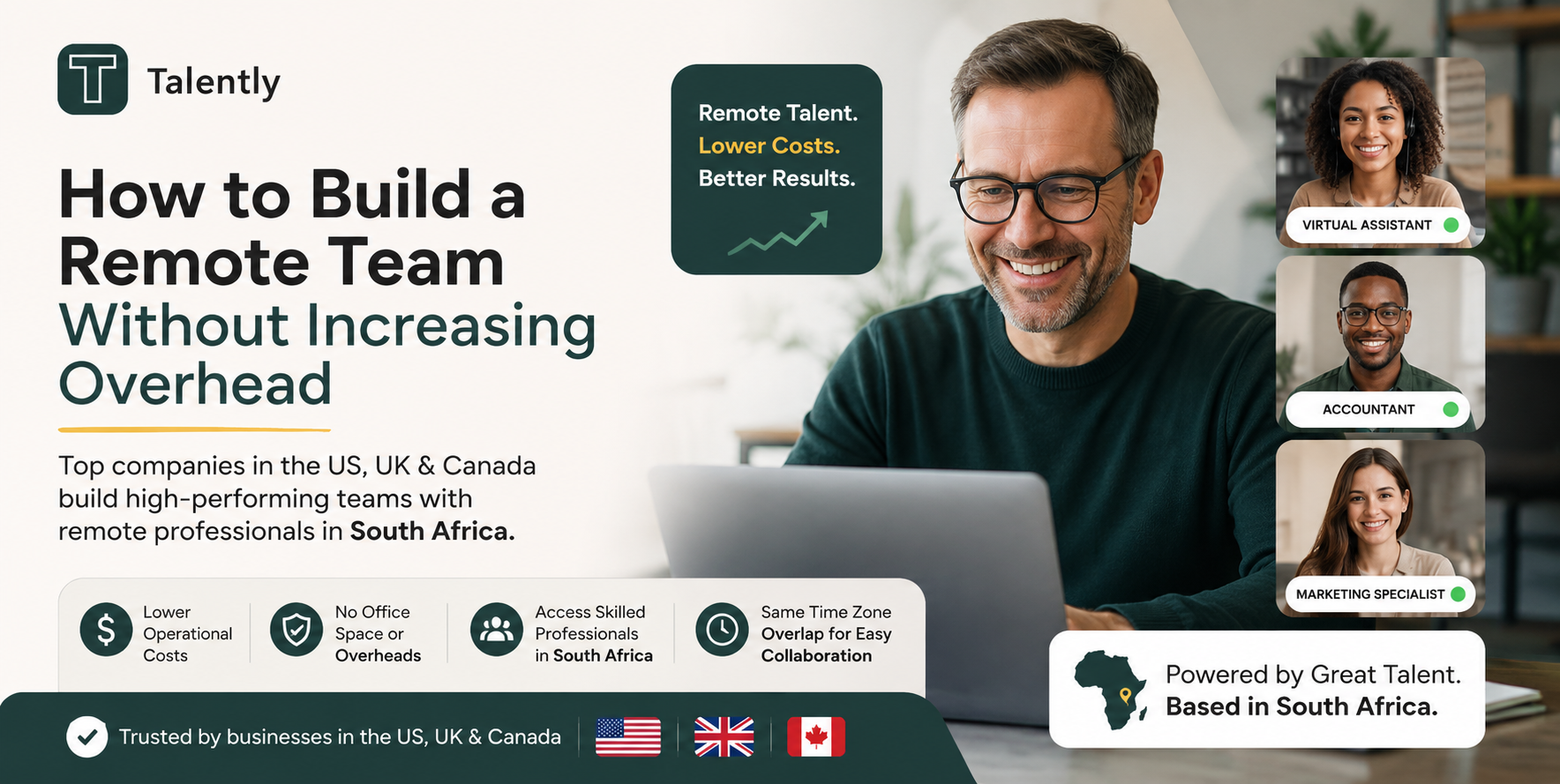
Building a high-performing team used to mean leasing office space, purchasing equipment, and increasing payroll costs every time your business grew. Today, companies across the United States, Canada, and the United Kingdom are discovering a smarter approach: they can build a remote team that scales efficiently without dramatically increasing overhead.
The challenge isn’t finding talent. It’s finding the right talent while keeping operational costs under control.
That’s where remote South African professionals are changing the game. Businesses are accessing skilled, English-speaking talent while maintaining flexibility, improving productivity, and reducing hiring expenses.
In this guide, you’ll learn how to build a remote team strategically, avoid common mistakes, and create a scalable workforce without burdening your budget.
What Does It Mean to Build a Remote Team?
A remote team is a group of employees or contractors who work from different locations instead of a central office.
Unlike traditional hiring models, remote teams allow businesses to access global talent pools, reduce infrastructure costs, and improve team scalability.
A successful remote team combines:
- Skilled professionals
- Clear communication systems
- Defined processes
- Strong leadership
- A healthy remote company culture
When implemented correctly, remote hiring becomes a growth strategy rather than a cost center.
Why Businesses Are Moving Toward Distributed Teams
The shift toward distributed teams isn’t just a trend—it’s becoming a competitive advantage.
Companies that embrace remote hiring gain access to talent beyond their local market while reducing expenses associated with office operations.
Key Benefits of Distributed Teams
| Traditional Hiring | Remote Hiring |
| Limited local talent pool | Access to global talent |
| Higher office costs | Reduced infrastructure expenses |
| Longer hiring cycles | Faster recruitment |
| Geographic restrictions | Location-independent hiring |
| Difficult scalability | Flexible team expansion |
For growing businesses, this flexibility creates opportunities to scale faster without increasing fixed costs.
How to Build a Remote Team Without Increasing Overhead
1. Hire Based on Skills, Not Geography
One of the biggest mistakes companies make is restricting hiring to expensive local markets.
By expanding recruitment internationally, businesses gain access to highly qualified professionals at more sustainable salary levels.
South Africa has become one of the most attractive talent markets for:
- Sales Development Representatives (SDRs)
- Executive Assistants
- Customer Success Specialists
- Marketing Professionals
- Recruiters
- Operations Coordinators
Many South African professionals possess strong English communication skills, international business experience, and cultural compatibility with Western markets.
2. Focus on Roles That Deliver Immediate ROI
Not every position should be hired first.
Prioritize roles that directly impact growth and productivity.
High-Impact Remote Roles
- Sales Development Representatives
- Customer Support Specialists
- Executive Assistants
- Virtual Operations Managers
- Social Media Managers
- Recruitment Coordinators
These positions often create measurable returns quickly while helping internal teams focus on strategic priorities.
3. Build Systems Before Expanding Headcount
A common misconception is that adding more employees automatically increases output.
In reality, poorly organized teams often become less productive as they grow.
Before hiring:
- Document workflows
- Create standard operating procedures (SOPs)
- Establish communication channels
- Define performance expectations
- Implement project management tools
Strong systems allow offshore employees to become productive faster and reduce management overhead.
How Remote Workforce Management Reduces Costs
Effective remote workforce management isn’t about monitoring employees every minute.
It’s about creating accountability through outcomes.
Instead of measuring hours worked, successful remote organizations focus on:
- Deliverables
- Performance metrics
- Team collaboration
- Goal achievement
This approach often leads to higher productivity while eliminating many traditional management costs.
Essential Remote Management Tools
- Slack for communication
- Microsoft Teams for collaboration
- Asana for project management
- Notion for documentation
- Zoom for meetings
When combined with clear processes, these tools help businesses manage growing teams without adding administrative complexity.
Why South African Talent Offers a Strategic Advantage
For companies in the US, UK, and Canada, South Africa presents a unique opportunity.
The country has developed a reputation for producing highly skilled remote professionals who align well with Western business practices.
Advantages of Hiring South African Professionals
- Native or near-native English proficiency
- Strong educational background
- Experience supporting international companies
- Excellent customer-facing skills
- Significant cost efficiencies compared to local hiring
This combination makes South Africa an attractive destination for businesses seeking sustainable growth.
Expert Insight
“The most scalable companies aren’t necessarily hiring more people—they’re hiring smarter. Accessing global talent markets allows organizations to increase output without proportionally increasing operating expenses.”
Businesses that build remote teams strategically often discover they can expand operations while maintaining lean organizational structures.
How to Create a Strong Remote Company Culture
One concern many leaders have is maintaining culture across different locations.

The reality is that culture isn’t created by office walls. It’s created through communication, leadership, and shared values.
Best Practices for Remote Company Culture
Establish Clear Expectations
Every employee should understand:
- Goals
- Responsibilities
- Success metrics
- Communication standards
Encourage Regular Connection
Use:
- Weekly team meetings
- Virtual coffee chats
- Recognition programs
- Team celebrations
Prioritize Transparency
Open communication builds trust and strengthens engagement across distributed teams.
A strong remote company culture often becomes a competitive advantage in attracting and retaining talent.
Common Mistakes When Building a Remote Team
Avoid these costly errors:
Hiring Too Quickly
Rushing recruitment often leads to poor fit and higher turnover.
Micromanaging Employees
Excessive oversight reduces trust and productivity.
Ignoring Onboarding
Remote employees require structured onboarding to succeed quickly.
Failing to Document Processes
Without clear systems, growth becomes difficult to sustain.
Choosing Cost Over Quality
The cheapest hire is rarely the most valuable hire.
Focus on talent, skills, and long-term contribution.
Team Scalability: The Secret to Sustainable Growth
Team scalability refers to the ability to grow your workforce without dramatically increasing operational complexity.
Businesses achieve scalability by:
- Hiring strategically
- Standardizing processes
- Leveraging remote talent
- Investing in technology
- Building repeatable systems
When done correctly, scaling a remote team becomes significantly more cost-effective than expanding traditional office-based operations.
Key Takeaways
- Building a remote team can reduce overhead while increasing access to top talent.
- Distributed teams offer flexibility, scalability, and cost efficiency.
- Strong systems are more important than larger headcounts.
- South African professionals provide an excellent combination of skills, communication ability, and affordability.
- Effective remote workforce management focuses on outcomes, not activity tracking.
- A strong remote company culture can thrive regardless of location.
- Strategic hiring creates sustainable long-term growth.
Frequently Asked Questions
1. What is the best way to build a remote team?
Start by identifying key roles, documenting processes, implementing communication tools, and hiring qualified professionals who align with your company goals.
2. How can remote teams reduce business overhead?
Remote teams eliminate many expenses associated with office space, utilities, equipment, and local recruitment while providing access to global talent.
3. Why are companies hiring offshore employees?
Businesses hire offshore employees to access specialized skills, improve scalability, and reduce operational costs without sacrificing quality.
4. Is South Africa a good place to hire remote professionals?
Yes. South Africa offers highly skilled, English-speaking professionals with strong experience supporting international businesses.
5. How do you manage distributed teams effectively?
Successful distributed teams rely on clear communication, documented processes, performance metrics, and collaboration tools.
6. What roles are best suited for remote hiring?
Sales, customer support, executive assistance, marketing, recruiting, and operations roles often perform exceptionally well in remote environments.
7. How can I maintain remote company culture across different countries?
Create consistent communication practices, celebrate achievements, encourage collaboration, and reinforce company values regularly.
Ready to Build a Remote Team Without Increasing Overhead?
Talently helps businesses in the US, UK, and Canada hire exceptional South African professionals across sales, support, operations, and administrative roles.
Find pre-vetted remote talent, reduce hiring costs, and scale faster with Talently.
Ready to build your dream team?
Book a free consultation and get your first candidate shortlist within 48 hours.
No upfront fee • Only pay if you hire