
Employee vs Contractor Checker
 3 min read
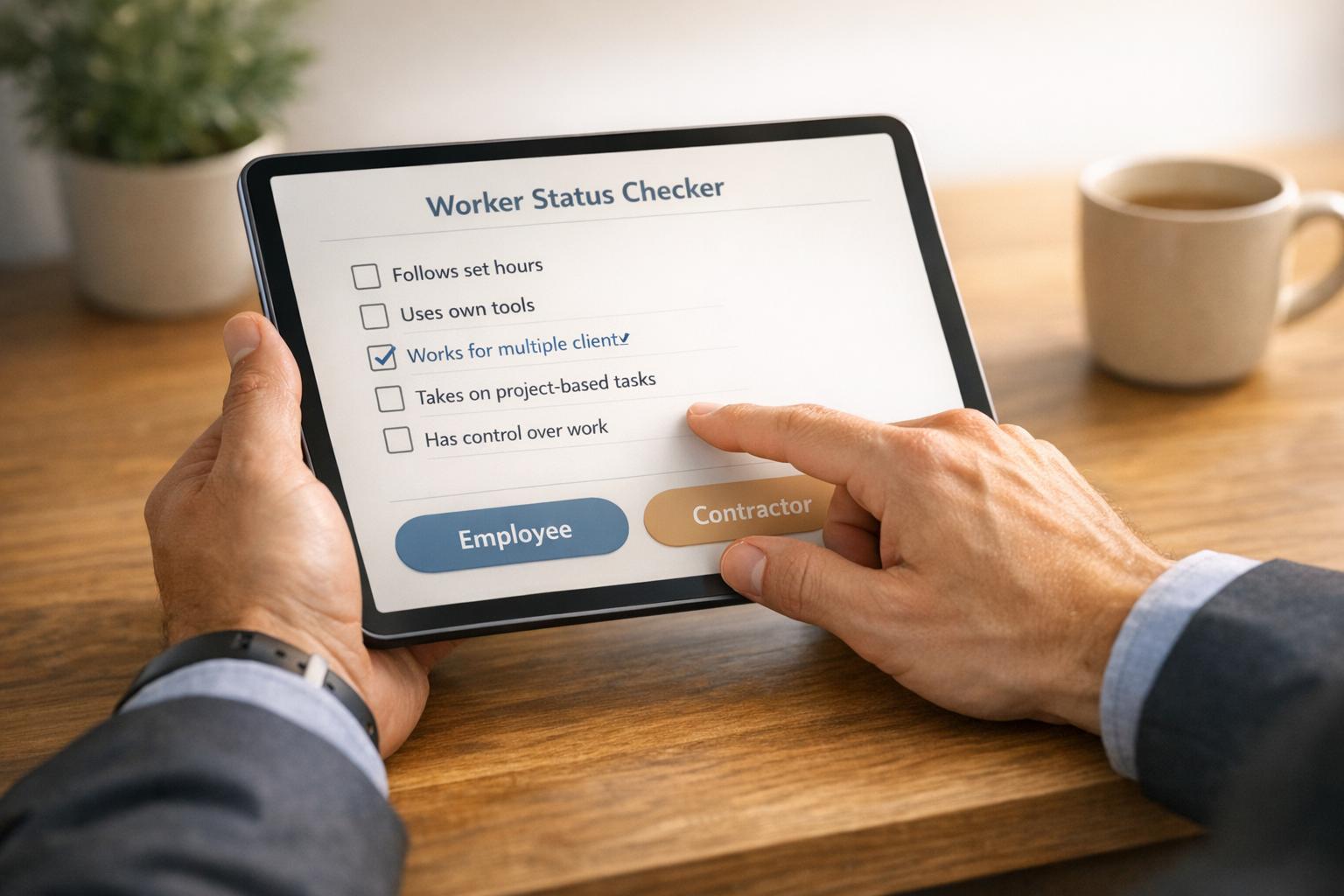
Worker Classification Assessment Tool
Hiring a freelancer, consultant, or part-time specialist can be straightforward until classification questions show up. A worker classification assessment tool helps you review the real substance of the relationship instead of relying on a title in a contract. That matters because calling someone an independent contractor doesn’t automatically make it true.
What the assessment looks at
This tool walks through the core factors behind employee vs independent contractor decisions: behavioral control, financial control, and the overall relationship. It asks practical questions about who sets hours, who provides equipment, whether the worker can realize a profit or loss, and whether the work is ongoing or central to the business.
Why this matters
A thoughtful worker classification assessment can help employers, founders, and operations teams spot risk before it turns into payroll errors, tax exposure, or wage claims. The result page gives a clear status banner, a section-by-section score breakdown, and flags responses that commonly signal misclassification risk.
This is a fast, usable way to organize the facts before you make a decision. It won’t replace legal advice, but it can help you ask better questions and avoid making a classification call based on guesswork alone.
FAQs
How accurate is this worker classification assessment?
This tool is designed to give practical guidance, not a final legal determination. It uses widely recognized common-law style factors to highlight how a work arrangement may lean, but real classification decisions can depend on jurisdiction, industry rules, contract terms, and the day-to-day facts of the relationship. It’s most useful as an early screening tool before payroll setup, contractor onboarding, or a compliance review.
What does “Needs Legal Review” mean?
That result usually means the answers are mixed or that one or more high-risk factors point in different directions. For example, someone may have a contractor agreement but still work set hours with company-provided equipment and ongoing supervision. When the facts don’t line up cleanly, a legal or HR review is the safest next step because labels alone usually don’t control classification.
Which answers tend to create the highest misclassification risk?
The biggest warning signs often involve control and dependence. If the business sets the worker’s schedule, location, methods, training, and supervision, that can look more like employment. Risk also increases when the company provides core tools, reimburses most expenses, offers benefits, expects ongoing work, or relies on the worker for tasks that are central to the business. This tool flags those answers so users can spot trouble areas quickly.
Ready to build your dream team?
Book a free consultation and get your first candidate shortlist within 48 hours.
No upfront fee • Only pay if you hire